
Celebrating Krishna Janmashtami 2026: Rituals, Fasting Rules, and Traditions
Krishna Janmashtami —also celebrated as Gokulashtami, Krishnashtami, or Sri Krishna Jayanti—marks the birth (Janmotsav) of Lord Krishna, the eighth avatar of Lord Vishnu. Occurring on the Ashtami Tithi (eighth day) of the dark fortnight (Krishna Paksha) in the Hindu month of Bhadrapada, this sacred festival brings millions together in dynamic devotion, overnight vigils, fasting, and joyous cultural spectacles.
Key Takeaways & Quick Overview
- Core Event: Birth celebration of Lord Krishna at midnight (Nishita Kaal).
- Key Rituals: Abhishekam (holy bath), dressing Laddu Gopal, swinging the Jhula (cradle), and Aarti.
- Essential Offerings (Bhog): Panchamrit, Makhan-Mishri, and Dhaniya Panjiri.
- Major Regional Attractions: Dahi Handi in Maharashtra, Rasa Leela in Vrindavan, and Gopalkala.
Janmashtami 2026: Date & Puja Timings
Because Lord Krishna was born at midnight under the Rohini Nakshatra, the exact midnight window (Nishita Puja Muhurat) holds the highest spiritual importance for performing prayers and breaking the fast (Parana).
| Auspicious Period | Date & Time (IST) |
| Janmashtami Date | Friday, September 4, 2026 |
| Ashtami Tithi Begins | 02:25 AM, Sep 4, 2026 |
| Ashtami Tithi Ends | 12:13 AM, Sep 5, 2026 |
| Rohini Nakshatra Begins | 12:29 AM, Sep 4, 2026 |
| Nishita Puja Muhurat (Midnight Window) | ~11:57 PM to 12:43 AM (Varies slightly by city) |
| Dahi Handi / Nanda Utsav | Saturday, September 5, 2026 |
Note: Always verify exact municipal timings using authoritative regional astronomical calendars such as Drik Panchang.
Step-by-Step Janmashtami Fasting & Puja Vidhi
Fasting (Vrat) on Janmashtami represents mental discipline, spiritual cleansing, and remaining vigilant just as Devaki and Vasudeva stayed watchful in Mathura’s prison before smuggling baby Krishna to safety.
1. Fasting Rules (Vrat Vidhi)
- Types of Fasting: Devotees choose between a Nirjala Vrat (strict fast without water) or a Phalahar Vrat (consuming fruits, milk, water, and sattvic items like sabudana and singhara flour).
- Parana (Breaking the Fast): Fasting concludes after the midnight Nishita Kaal puja is complete or when the Ashtami Tithi officially ends on September 5.
2. Ritual Sequence for the Altar
- Purification: Clean the puja room and place a wooden platform (chowki) covered with a red or yellow cloth.
- Abhishekam (Holy Bath): Place the idol of Laddu Gopal (Baby Krishna) in a vessel. Gently bathe the deity using Panchamrit—a mixture of milk, curd, ghee, honey, and sugar—followed by purified water or Gangajal.
- Adornment (Shringar): Dry the deity with a clean cloth. Dress Laddu Gopal in new, vibrant clothes (vastra) and adorn him with a crown (mukut), a peacock feather (mor pankh), and a small flute (bansuri).
- Cradle Placement (Jhula): Place the idol inside a decorated swing (Jhula). Devotees gently rock the swing while chanting hymns.
- Offering Bhog & Chanting: Offer fresh Tulsi leaves, sweets, and Panchamrit. Recite the sacred 12-syllable mantra:
$$\text{Om Namo Bhagavate Vasudevaya}$$
or chant the Hare Krishna Mahamantra.
- Midnight Aarti: Ring bells, blow the conch shell (shankh), sing the primary Krishna Aarti at midnight, and distribute the Prasad.
Sacred Food Offerings (Janmashtami Bhog)
Food preparations reflect Lord Krishna’s pastoral upbringing in Braj, prioritizing fresh dairy products and gut-friendly spices.
- Makhan-Mishri: Freshly churned white butter mixed with rock sugar, reflecting Krishna’s playful persona as Makhan Chor (the butter thief).
- Panchamrit: A symbolic elixir made from five pure ingredients—milk (purity), curd (prosperity), ghee (strength), honey (devotion/unity), and sugar (sweetness).
- Dhaniya Panjiri: A traditional, roasted mix of coarse coriander powder, desi ghee, powdered sugar, and dry fruits. Consumed after a full day of fasting, coriander aids digestion and restores energy safely.
- Chappan Bhog: In major temples across Mathura and Vrindavan, a grand feast of 56 distinct sweet and savory dishes is offered to the deity.
Diverse Regional Celebrations Across India
While the core spirit remains identical, cultural expressions vary across regions:
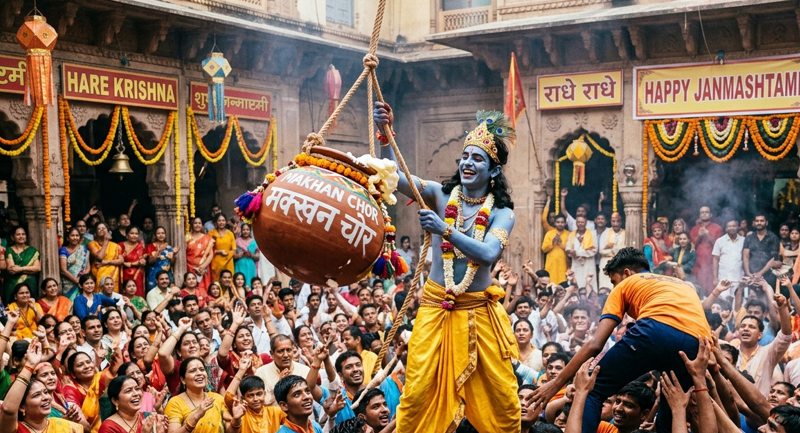
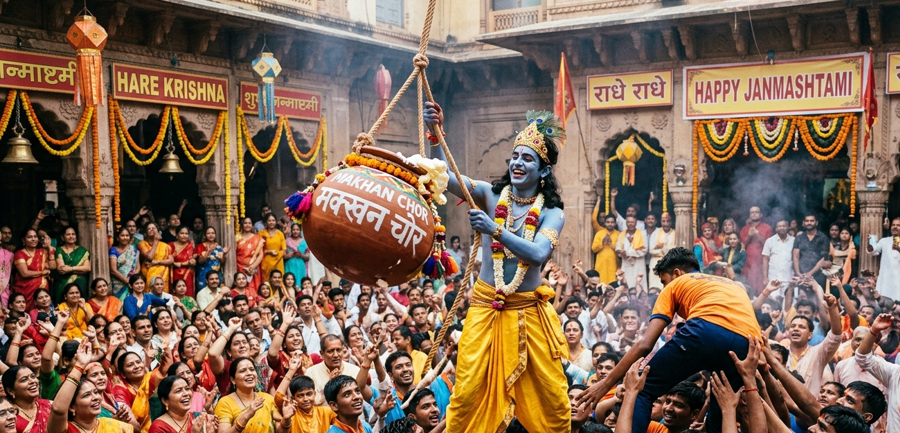
- Maharashtra (Dahi Handi): On the day following Janmashtami (Nanda Utsav), teams of energetic youths known as Govinda Pathaks form massive human pyramids to break earthen pots (handis) filled with curd and butter suspended high above the streets.
- Braj Region (Mathura & Vrindavan): The heartland of Krishna’s early life hosts night-long temple festivals, devotional singing, and elaborate Rasa Leela—dramatized re-enactments of Krishna’s divine play with the gopis.
- South India (Gokulashtami): Families in Tamil Nadu and Kerala draw tiny rice-flour footprints leading from their main doorstep to the puja room, symbolically welcoming baby Krishna into their homes.
Learn more about the epic life and philosophical teachings of Lord Krishna through the comprehensive literary archives of the Bhagavad Gita Trust.
Frequently Asked Questions (FAQs)
Q1. Why are Tulsi leaves mandatory for Janmashtami Bhog?
In Hindu tradition, Lord Krishna does not accept food offerings (bhog) without a holy Tulsi (Holy Basil) leaf. Tulsi symbolizes supreme devotion and purity.
Q2. When should I break my Janmashtami fast?
The fast should ideally be broken (Parana) after performing the midnight Nishita Kaal puja and offering Aarti, or after the sunrise on the following morning, depending on your family’s sampradaya (lineage) rules.
Q3. Can pregnant women or elderly individuals fast on Janmashtami?
Strict fasting is not obligatory for pregnant women, elderly individuals, or those with medical conditions. Observing a mild Phalahar fast (fruits and milk) or simply engaging in mental prayers (Manas Puja) is fully permissible.