
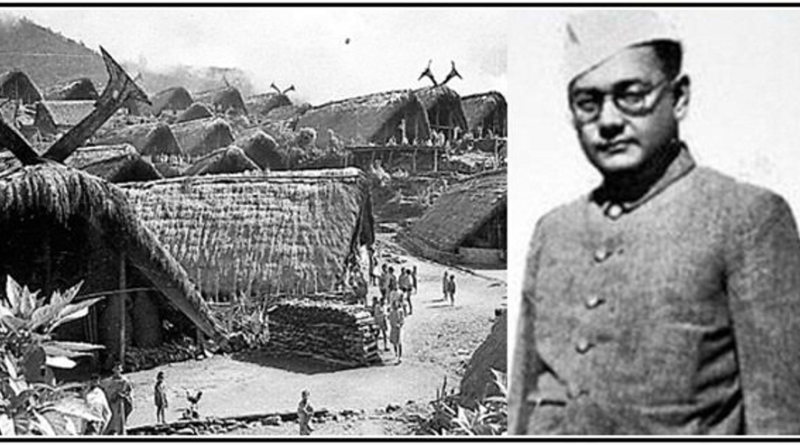
Forgotten Footsteps of WWII: Uncovering the Untold War Legacy of Phek, Nagaland
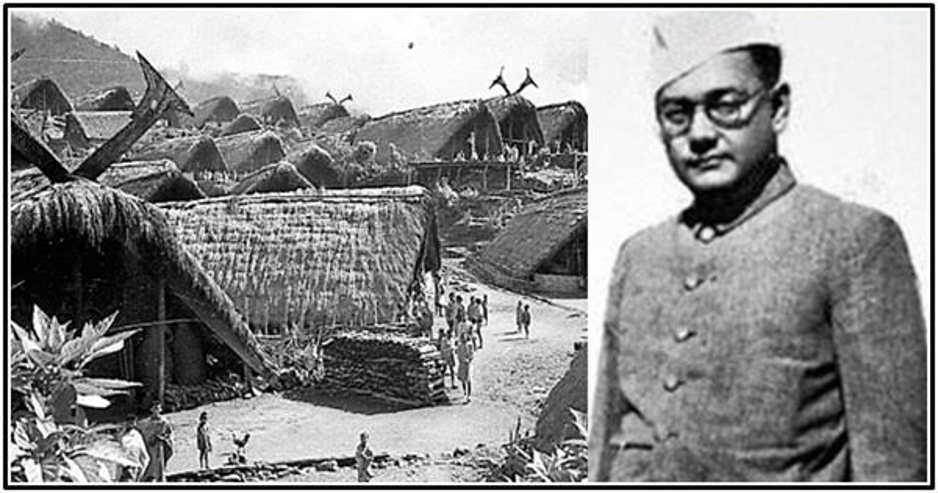
Netaji Subhas Chandra Bose established an INA operational base in Phek, Nagaland in 1944.. Source: myIndiamyGlory
The history of World War II in the Asia-Pacific theater is incomplete without understanding the strategic trails of Phek district in Nagaland. While mainstream narratives frequently focus on the intense frontline combat at the Battle of Kohima, Phek served as a vital operational hub, intelligence axis, and logistical lifeline during the 1944 Japanese 31st Division offensive. Nestled along the rugged high-altitude ridges near the Myanmar border, Phek’s dense jungle terrain and steep mountain passes became the canvas where global military strategy, indigenous Naga bravery, and the Indian freedom movement under Netaji Subhas Chandra Bose directly intersected.
At the epicenter of this historical legacy stands Rüzazho Village, uniquely recognized as the first village in the Naga Hills to be liberated from British colonial rule and placed under direct administration by the Azad Hind Fauj (Indian National Army). In April 1944, Netaji Subhas Chandra Bose arrived in Rüzazho, establishing an administrative and military base. During his stay, Netaji set up a functioning local governance system, appointing village elders as administrators, establishing grain distribution networks, and organizing logistics to support advancing troops. Today, Rüzazho preserves the wooden house where Netaji resided, alongside memorial stones and oral traditions passed down by village elders who met Bose in person.
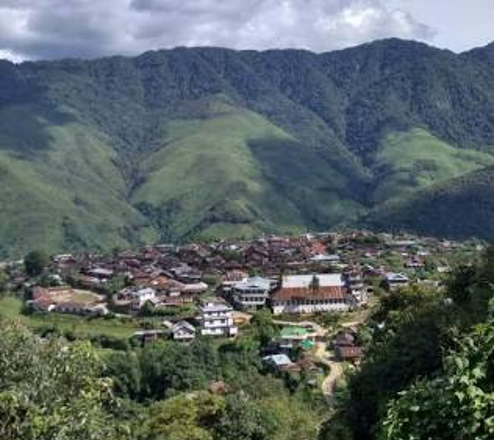
Rüzazho village in Phek, Nagaland.
A short distance away along the high mountain ridges, Chesezu Village served as another strategic observation post and tactical headquarters for Netaji and the joint INA-Japanese forces. Perched atop commanding heights, Chesezu offered clear visual command over the surrounding valleys leading toward Kohima and Manipur, allowing commanders to track Allied troop movements and manage supply lines. Today, Chesezu honors this heritage through a dedicated Netaji Subhas Chandra Bose memorial complex, complete with a commemorative statue, a historical park, and a restored watchtower overlooking the valley.
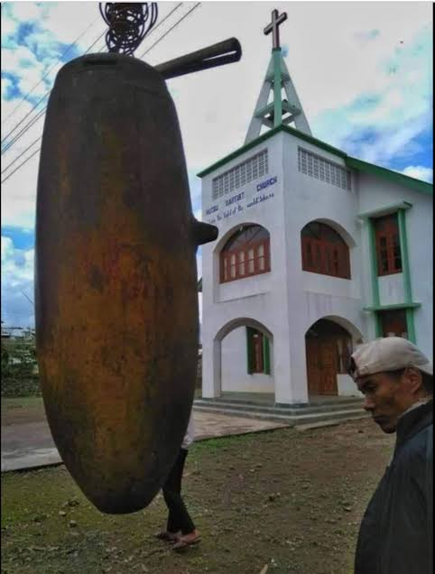
An unexploded WWII bomb casing repurposed into a church bell in Sohomi village, Phek.. Source: Facebook
Beyond political administration, the physical remnants of the 1944 air strikes and ground skirmishes remain embedded in daily village life throughout Phek. In Sohomi Village, residents routinely discovered unexploded ordnance and discarded artillery after the retreat of military forces. Demonstrating remarkable community ingenuity, local blacksmiths and elders defused giant aerial bomb casings, hollowed them out, and suspended them outside the village church. Serving today as church bells and community gongs, these repurposed artifacts stand as striking local symbols that transformed instruments of destruction into daily calls to peace and worship.
Throughout the campaign, the indigenous Chakhesang Naga people of Phek displayed extraordinary courage while navigating the harsh realities of wartime occupation and food scarcity. Drawing on ancestral terrain knowledge, Naga scouts guided Allied reconnaissance teams through uncharted mountain paths to disrupt enemy lines, while porters hauled medical supplies and ammunition across steep ridges where vehicles could not pass. Local villagers also repeatedly risked their lives to rescue and shelter downed Allied pilots in the Patkai range, smuggling them past enemy patrols to safety. Preserving these heritage sites across Phek—from the INA bases of Rüzazho and Chesezu to the living war artifacts of Sohomi—ensures that the extraordinary local legacy of World War II continues to be honored alongside Nagaland’s broader historical sites, such as the Nagaland World War II Museum in Kisama.
How to Reach Phek District and Historic Villages
Reaching the historical World War II sites in Phek requires traveling through Nagaland’s major entry hubs, followed by a scenic mountain road drive.
- By Air: The nearest airport is Dimapur Airport (DMU), located roughly 200 kilometers from Phek district headquarters and about 130 to 150 kilometers from key heritage towns like Pfütsero and Chesezu. Direct flights connect Dimapur to major Indian cities such as Kolkata, Guwahati, and New Delhi. From the airport, travelers can hire private taxis or board shared vehicles to Kohima or directly into Phek.
- By Rail: The primary rail gateway is Dimapur Railway Station (and nearby Chümoukedima-Shokhüvi), which is well connected to Guwahati and rest of India via major broad-gauge trains. Upon arriving in Dimapur, regular taxi and bus services operate daily along National Highway 29 toward Kohima.
- By Road from Kohima: Kohima serves as the principal launching point for exploring Phek’s WWII historic sites. Pfütsero, the high-altitude entry town in Phek, lies approximately 60 to 70 kilometers southeast of Kohima along the Kohima–Jessami road. From Pfütsero or Kohima, shared Sumos and private taxis regularly connect to historic villages such as Rüzazho, Chesezu, and Sohomi, which are located within a short driving radius of 15 to 30 kilometers from Pfütsero town.
Permit Requirements: All domestic Indian tourists visiting Nagaland must obtain an Inner Line Permit (ILP), which can be applied for online via the Nagaland State Government ILP portal or acquired at entry points like Dimapur. Foreign nationals do not require an ILP but must register with the local Foreigners Registration Office (FRO) upon arrival in Kohima or Phek district.