
The Tragic Hero of Ketsapomi: A Forgotten Story of Naga Resistance in World War II
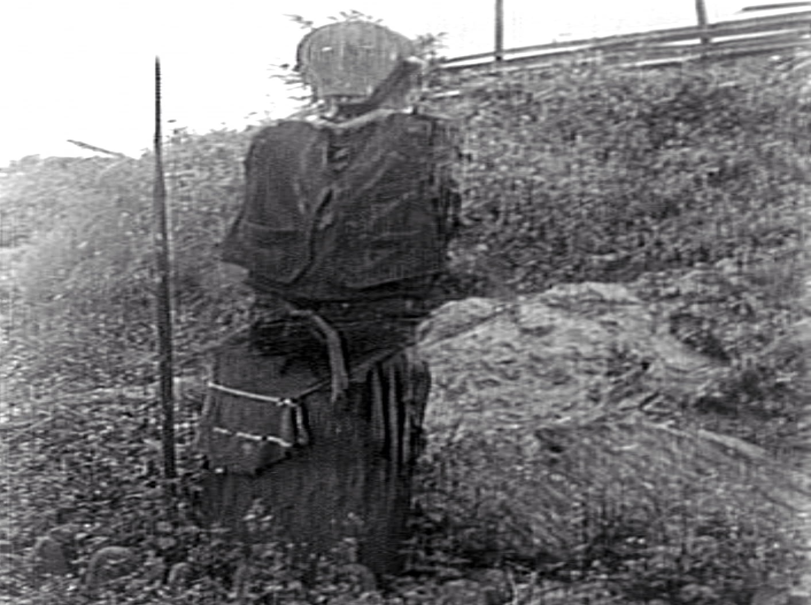
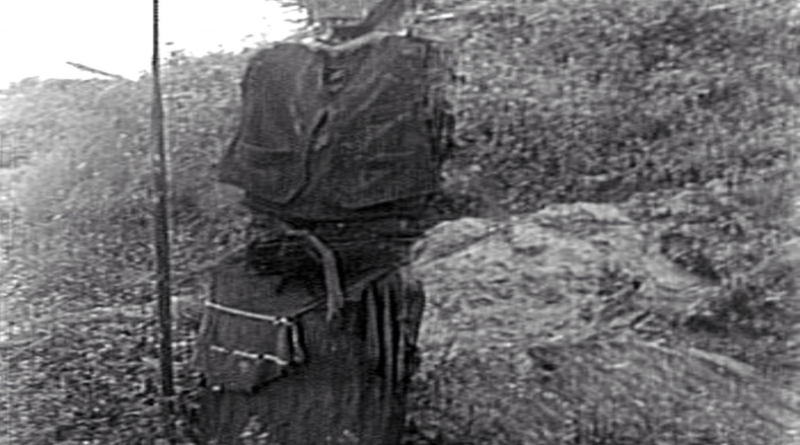
When we talk about World War II in Northeast India, the mind immediately travels to the iconic Battle of Kohima or the relentless siege of Imphal. But hidden away in the rugged hills of the Phek district in Nagaland, there are deeply personal, haunting stories of valor that history books often leave behind. One such story belongs to Choie, a former village headman from Ketsapomi (Ketsapo) village. Discovered within the rare archival collection of W.G. Archer (captured between 1946 and 1948), this haunting photograph shows a tall, wooden grave effigy erected in Choie’s memory. It stands not just as a funerary monument, but as a silent testament to a tragic execution and unyielding loyalty during the Japanese invasion of 1944.
During the intense Axis offensive in 1944, Japanese troops pushed deep into the Naga Hills. As they entered Ketsapomi village, they captured the village headman, Choie. Desperate for tactical intelligence, the Japanese soldiers aggressively demanded information about the positioning, movement, and strength of the British forces. When asked, “Tell us how many British soldiers are coming,” Choie stood firm against immense pressure and simply replied: “I do not know.” Refusing to turn informant or compromise his people, Choie chose silence over betrayal. Enraged by his defiance, the Japanese forces executed the headman on the spot. To strip him of dignity in death, his executioners cast his body deep into the dense, unforgiving jungle. Despite later search efforts by the devastated community, his body was never recovered.
Because Choie’s physical remains were lost to the wilderness, his family and the community erected this striking wooden effigy next to his house to serve as his final resting place. In Eastern Angami culture, grave effigies are highly symbolic. If you look closely at the structure recorded by W.G. Archer, you will see a tall, intricately carved wooden body dressed in traditional attire, representing the deceased’s spirit, placed on a little stone platform surrounded by rounded stones that denote family lineage and societal standing.
Interestingly, W.G. Archer’s notes mention a distinct feature—this effigy noted he “had not taken heads.” While historical Naga honors were often reserved for traditional warriors who had partaken in head-hunting, Choie was honored uniquely as a modern martyr. He died protecting his community from the horrors of global warfare.
This photograph is part of a monumental ethnographic survey conducted by W.G. Archer (and his wife Mildred Archer) as the British administration transitioned out of India. Captured just a couple of years after the war ended, these notes preserve raw, unfiltered oral histories directly from the villagers who survived the conflict. Today, archives and digitizations like the Naga Database Project help keep these fragile documents alive, offering researchers and travelers a glimpse into how global conflicts fractured local indigenous societies.
As battlefield tourism grows in Nagaland, destinations like the Kohima War Cemetery draw thousands of visitors annually. However, the real soul of the region’s history lies in rural districts like Phek. Visiting villages like Ketsapo helps us remember that the Second World War wasn’t just fought by major world powers; it was borne on the shoulders of local leaders who paid the ultimate price for peace. Have you ever visited World War II heritage sites in Nagaland? Let us know in the comments below, and don’t forget to share this article to keep the memory of heroes like Choie alive!