
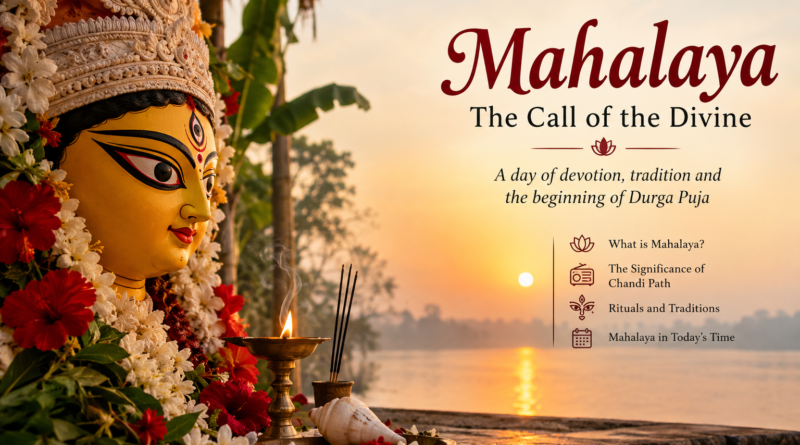
Mahalaya 2026: Meaning, Significance, Traditions and Durga Puja
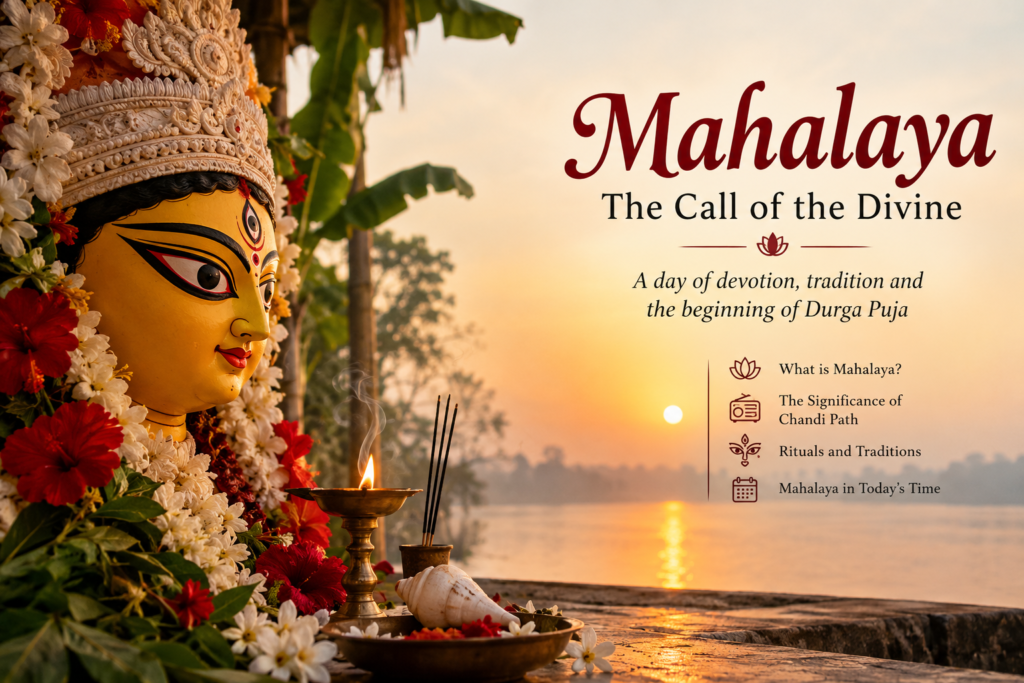
Mahalaya is one of the most meaningful occasions in the cultural and religious calendar of eastern India, especially West Bengal and Assam. It marks a significant transition from the period of remembering ancestors to the anticipation of Durga Puja, the grand festival celebrating Goddess Durga.
For many people, Mahalaya is more than a religious observance. It is a morning filled with devotional songs, sacred chants, memories of family traditions and the excitement of welcoming the Divine Mother. The familiar recitation of Mahishasura Mardini has become an enduring part of the occasion for generations of listeners.
In 2026, Mahalaya falls on 10 October, according to the West Bengal government’s Puja calendar. The day connects spiritual devotion, ancestral remembrance and the cultural anticipation of Durga Puja.
What Is Mahalaya?
Mahalaya is traditionally associated with the conclusion of Pitru Paksha, a period dedicated to remembering and honouring deceased ancestors, and the beginning of Devi Paksha, which heralds the worship of the Divine Mother in several eastern Indian traditions.
The occasion carries two important meanings. First, it encourages people to express gratitude towards their ancestors through prayers and rituals. Second, it signals the approaching arrival of Goddess Durga and the beginning of the festive season.
According to India’s Ministry of Tourism’s cultural event information, Mahalaya is associated with the invocation of Goddess Durga and the offering of tarpan to ancestors.
The observance therefore brings together remembrance, faith, gratitude and hope.
Mahalaya 2026: Date and Significance
Mahalaya will be observed on Saturday, 10 October 2026. It is an important date in the lead-up to Durga Puja, although the exact customs and religious interpretations can differ between regions and families.
The official Puja calendar of West Bengal lists Durga Puja celebrations from 17 to 21 October 2026, beginning with Maha Shashthi on 17 October.
Mahalaya is significant because it marks a spiritual transition. Families remember their departed loved ones, devotees listen to sacred recitations, and preparations for Durga Puja gain momentum.
For many households, the day also represents the emotional beginning of autumn festivities, when familiar songs and rituals bring back memories of childhood and family gatherings.
The Religious Significance of Mahalaya
1. Remembering Our Ancestors
One of the central aspects of Mahalaya is its association with ancestral remembrance. During Pitru Paksha, Hindu families traditionally offer prayers and perform rituals in honour of deceased parents, grandparents and other ancestors.
Common practices include Shraddha, tarpan and, in some traditions, pinda daan. These observances express gratitude and respect for previous generations.
The Art of Living’s guide to Pitru Paksha explains the cultural importance of remembering ancestors and acknowledging their contribution to family and society.
At its heart, this tradition encourages people to remember where they come from and recognise the influence of earlier generations on their present lives.
2. Welcoming Goddess Durga
In Bengali tradition, Mahalaya is closely associated with the arrival of Goddess Durga. It marks the beginning of the spiritual anticipation surrounding Durga Puja.
Goddess Durga represents divine strength, protection and the victory of righteousness over evil. Her arrival symbolises renewed hope and the possibility of overcoming difficulties through courage, faith and determination.
Mahalaya reminds devotees that the celebration of Durga Puja is not merely a public festival but also an occasion for spiritual reflection.
3. The Victory of Good over Evil
The story of Goddess Durga’s victory over Mahishasura is central to the religious imagination surrounding Durga Puja. Mahishasura represents destructive and oppressive forces, while the goddess embodies divine power and the restoration of balance.
The narrative is associated with the Devi Mahatmya, also known as the Durga Saptashati or Chandi, a sacred text describing the power and victories of the Goddess.
Readers interested in the religious background can explore this introduction to Mahalaya and its scriptural traditions.
The story continues to inspire people through its message that courage, justice and goodness can overcome destructive forces.
Mahishasura Mardini: The Voice of Mahalaya
For countless listeners, Mahalaya is inseparable from Mahishasura Mardini, the celebrated devotional radio programme associated with All India Radio, now known as Akashvani.
The programme combines Sanskrit chants, devotional music and narration centred on the story of Goddess Durga. The voice of Birendra Krishna Bhadra has become especially iconic, making the broadcast an enduring part of Bengali cultural heritage.
Traditionally, many families wake up before sunrise on Mahalaya morning to listen to the programme. The experience often brings together family members who listen quietly at home as the day begins.
According to Akashvani News’ report on Mahalaya 2026, the broadcast remains an integral part of the occasion’s cultural identity.
Its importance extends beyond religion. The programme preserves a shared cultural memory through sound, language, music and storytelling.
How Is Mahalaya Celebrated?
Mahalaya is observed through a variety of religious and cultural practices. The precise customs vary according to regional traditions, family beliefs and local communities.
Listening to devotional recitations: Many people begin the morning by listening to Mahishasura Mardini or other prayers dedicated to Goddess Durga.
Offering tarpan: Some devotees offer water and prayers to their ancestors, often at rivers or other water bodies, as part of their ancestral observances.
Performing Shraddha rituals: Families may perform traditional rites in remembrance of deceased relatives.
Visiting places of worship: Devotees offer prayers and seek the blessings of the Divine Mother.
Preparing for Durga Puja: Homes, neighbourhoods and community organisations begin preparing for the approaching celebrations, including decorations and cultural activities.
These practices illustrate how Mahalaya combines religious devotion with collective cultural participation.
Mahalaya and Durga Puja: What Is the Connection?
Although Mahalaya and Durga Puja are closely connected, they are not the same observance.
Mahalaya marks an important spiritual and cultural transition, while Durga Puja is the festival during which devotees worship Goddess Durga through a series of rituals and celebrations.
In Bengali tradition, Mahalaya is associated with the beginning of Devi Paksha and the anticipation of the goddess’s arrival. The main public celebrations follow later, with rituals, beautifully decorated pandals, artistic idols, music and community gatherings.
For many people, Mahalaya creates the emotional atmosphere of Durga Puja before the main festivities begin.
To follow the dates for the 2026 celebrations, consult the West Bengal government’s Puja calendar.
The Cultural Importance of Mahalaya in Bengal and Assam
Mahalaya holds a special place in Bengali cultural life, but its influence also extends to neighbouring regions, including Assam, where communities have their own diverse traditions of worship and seasonal celebration.
In Bengali households, the early-morning broadcast, the sound of conch shells, devotional music and the preparations for Durga Puja form a familiar cultural experience.
For Bengali communities living away from their ancestral homes, Mahalaya can create a sense of connection with family, language and cultural identity.
In Assam, Durga Puja is also celebrated in many communities through worship, public gatherings and cultural programmes. The broader festive season offers opportunities for social interaction, artistic expression and the preservation of traditions.
Mahalaya thus illustrates how religious observances can become part of a community’s collective memory and cultural heritage.
The Message of Mahalaya in Modern Life
Mahalaya continues to hold relevance in a rapidly changing world because its central themes remain meaningful.
Gratitude: Remembering ancestors encourages appreciation for the generations that shaped our lives.
Courage: The story of Goddess Durga inspires people to face difficulties with strength and determination.
Hope: The beginning of the festive season represents renewal and the possibility of positive change.
Cultural continuity: Music, rituals and storytelling connect younger generations with the traditions of their families and communities.
Community: Shared celebrations bring people together across generations and social backgrounds.
These values help explain why Mahalaya remains meaningful even for people whose experience of the occasion is primarily cultural rather than religious.
Conclusion
Mahalaya is a powerful combination of devotion, remembrance and cultural identity. It honours ancestors, invokes the blessings of Goddess Durga and signals the approaching celebrations of Durga Puja.
From the timeless strains of Mahishasura Mardini to the quiet observance of ancestral rituals, Mahalaya brings together personal memories and shared traditions. Its significance lies not only in religious practices but also in its enduring messages of gratitude, courage, hope and togetherness.
As Mahalaya 2026 arrives on 10 October, the occasion once again invites people to remember their roots, celebrate their cultural heritage and welcome the festive season with renewed faith and optimism.
Frequently Asked Questions (FAQs)
1. When is Mahalaya in 2026?
Mahalaya falls on 10 October 2026. You can verify the date through the West Bengal government’s Puja calendar.
2. Why is Mahalaya celebrated?
Mahalaya is associated with remembering ancestors, the transition from Pitru Paksha to Devi Paksha in eastern Indian traditions, and the anticipation of Goddess Durga’s arrival before Durga Puja.
3. What is Mahishasura Mardini?
Mahishasura Mardini is a well-known devotional radio programme featuring sacred chants, songs and narration about Goddess Durga’s victory over Mahishasura. It is traditionally listened to by many families on Mahalaya morning.
4. What is the significance of tarpan on Mahalaya?
Tarpan is a ritual offering of water, often accompanied by prayers, to honour departed ancestors. It is practised as part of ancestral observances in several Hindu traditions.
5. Is Mahalaya the first day of Durga Puja?
Mahalaya signals the beginning of the spiritual anticipation of Durga Puja, but the main festival rituals begin later. In West Bengal’s 2026 calendar, Maha Shashthi falls on 17 October.
6. What is the main message of Mahalaya?
Mahalaya highlights gratitude towards ancestors, devotion to the Divine Mother, the triumph of good over evil and the importance of preserving cultural traditions.
Disclaimer: This article presents general cultural and religious information. Rituals and interpretations vary across communities, regions and family traditions.