
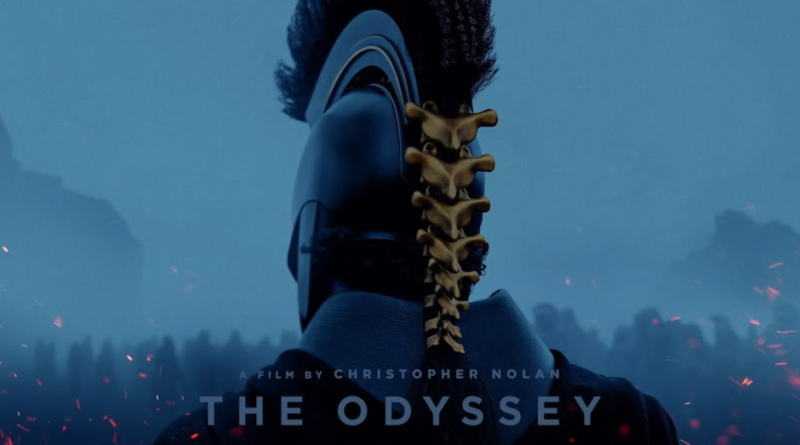
The Odyssey Review: Nolan’s Greatest Epic Yet!
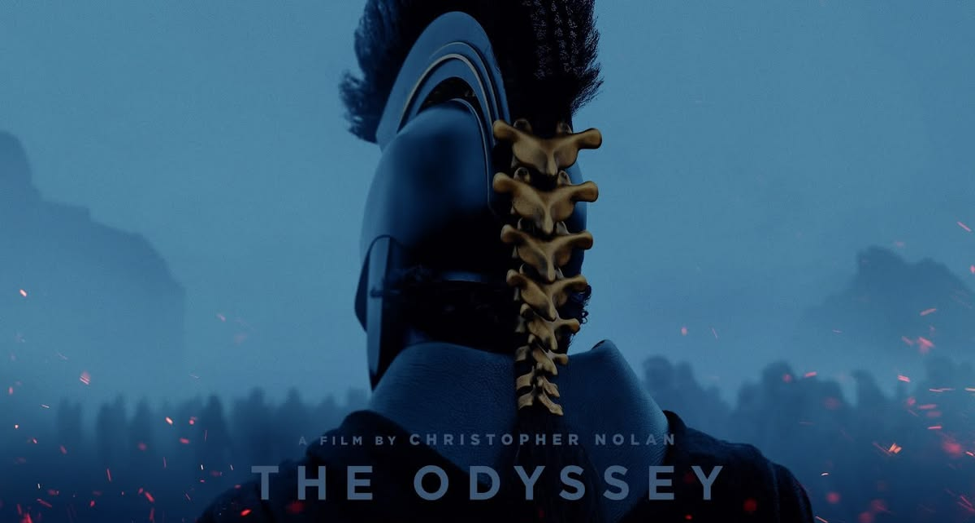
Quick Verdict: Christopher Nolan’s The Odyssey (2026) is a towering cinematic event that entirely strips away the glossy fantasy of typical Hollywood epics. Shot exclusively on IMAX 70mm cameras, it reinterprets Homer’s legendary sea voyage as a gritty, psychological battle with wartime trauma and cosmic isolation. While its non-linear pacing might confuse casual viewers in the opening acts, Matt Damon’s careworn performance transforms this ancient poem into a modern masterpiece. It demands to be experienced on the largest screen available.
The Plot: A Non-Linear Trial of Survival
Nolan does not tell this story chronologically. Much like Homer’s original structure, the film utilizes a fractured narrative timeline. It begins near the end with a storyteller—played by Travis Scott—setting the stage, before plunging us back into the claustrophobic nightmare of the Trojan Horse, which Nolan reimagines as a massive, sand-buried monument akin to Ozymandias.
The film follows Odysseus (Matt Damon), the brilliant but psychically wounded King of Ithaca, navigating a ten-year nightmare to reunite with his wife Penelope (Anne Hathaway) and his son Telemachus (Tom Holland).
Rather than standard fantasy villains, the monsters and landscapes function as psychological extensions of the characters’ guilt. The true antagonist is the violation of xenia (the sacred ancient Greek law of hospitality to strangers), which drives the film’s brutal central betrayals.
The Standout Features: Why Nolan’s Vision Works
1. Practical Monster Effects and IMAX Realism
Instead of drowning the film in green-screen CGI, Nolan leans into staggering practical effects inspired by old-school masters like Ray Harryhausen.
- The Sea/Poseidon: Poseidon isn’t a giant digital monster rising from the deep; he is treated as an animistic force—felt through the terrifying, real-world wrath of the ocean captured on massive 70mm film.
- The Cyclops & Circe: Characters like Polyphemus and Circe (Samantha Morton) feel tangibly dangerous, grounded heavily in a dirty, tactile reality.
2. A Haunting, Grounded Cast
Matt Damon delivers a masterclass in quiet anguish, turning the legendary warrior into a careworn mask of sadness carrying severe PTSD. Tom Holland grounds the home-front narrative as a desperate Telemachus trying to protect his mother, while Robert Pattinson plays the lead suitor, Antinous, with a chilling, parasitic cruelty.
The Flaws: Where the Odyssey Wavers
The primary point of friction lies in the film’s 173-minute runtime. The non-linear flashbacks and hallucination-heavy sequences during Odysseus’s time on Ogygia with Calypso (Charlize Theron) occasionally stall the forward momentum of the plot. Some audiences may find the expository dialogue regarding “Zeus’ Law” slightly heavy-handed during the slower midsection.
Quick Breakdown: The Pros and Cons
| What Placed It Among the Stars (Pros) | Where the Sails Faltered (Cons) |
| Breathtaking Practical Scale: The IMAX 70mm cinematography is unmatched. | Challenging Pacing: A dense, non-linear structure that demands patience. |
| Deep Thematic Resonance: Brilliant commentary on the trauma of war. | Expository Dialogue: A few clunky lines explaining ancient Greek customs. |
| Incredible Score: Ludwig Göransson’s thrumming percussion keeps the tension high. | Underused Cast: A massive ensemble means some gods/allies get minimal runtime. |
Final Verdict: Is The Odyssey (2026) Worth the Hype?
Christopher Nolan’s The Odyssey is an uncompromised, sensory-shattering piece of filmmaking. It isn’t a traditional, popcorn-chomping action movie; it is a dark, experimental, and awe-inspiring character study disguised as a summer blockbuster.
- Our Rating: 9/10
- Best Suited For: Fans of Dunkirk and Oppenheimer, Greek mythology enthusiasts looking for a mature adaptation, and anyone who appreciates uncompromising cinema.
Frequently Asked Questions (FAQ)
Is Christopher Nolan’s The Odyssey accurate to Homer’s poem?
Nolan is highly faithful to the thematic spirit of the epic and its structural roots, but he makes crucial creative changes. For instance, he incorporates the story of the Trojan Horse (traditionally found in Virgil’s Aeneid, not Homer’s poem) and treats the mythical monsters as psychological hurdles as much as physical ones.
Why is the film shot entirely on IMAX 70mm?
Nolan chose this format to capture the immense, isolating vastness of the sea without relying on digital green-screen environments. It is the first feature-length film to be captured entirely on these massive cameras.
How long is Christopher Nolan’s new movie?
The Odyssey runs for 2 hours and 53 minutes (173 minutes).