
Navigating the Deluge: Unpacking the Nepal Floods, India’s Response, and the Road Ahead
Monsoon seasons across South Asia have increasingly shifted from predictable agricultural lifeblood to unpredictable environmental crises. The recent devastating flash floods in Nepal serve as a stark reminder of the region’s climate vulnerability.
As mountain streams overflowed and key infrastructure washed away, the disaster escalated into a humanitarian challenge requiring immediate cross-border action. Understanding the dynamics of this crisis requires examining the root causes of the flood, analyzing how neighboring nations like India responded, and identifying essential strategic takeaways for future resilience.
What Triggered the Nepal Floods?
Nepal’s unique geography—steep topographies, high-altitude glacier networks, and fragile mountain ecosystems—makes it exceptionally susceptible to extreme hydrometeorological events.
- Intense Cloudbursts: Unusually high volumes of short-duration rainfall saturated river basins beyond capacity.
- Transboundary Water Swells: Rapid water accumulation along glacial lakes and river channels flowing across regional borders rapidly accelerated flash flood conditions downstream.
- Infrastructure Vulnerability: Heavy inundation triggered landslides that disrupted essential roadways, breached local dams, and paralyzed regional hydro-power grids.
For a deep dive into how high-altitude weather patterns impact mountain terrain, explore detailed analyses on climate-driven hydrological shifts.
India’s First Responder Role: HADR Support and Relief Operations
Given the shared rivers, open borders, and historical ties between the two nations, India acted quickly under its “Neighbourhood First” policy to provide emergency support.
1. Rapid Airlift & Strategic Logistics
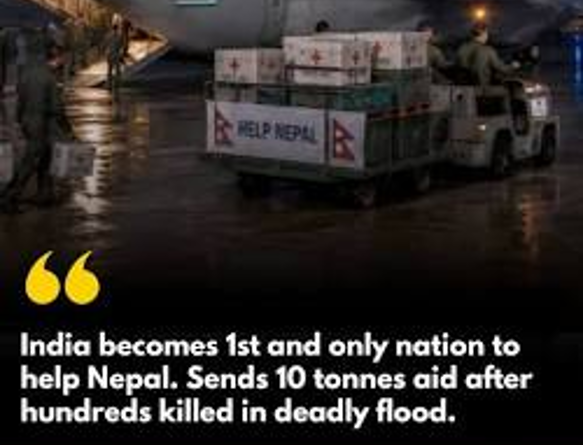
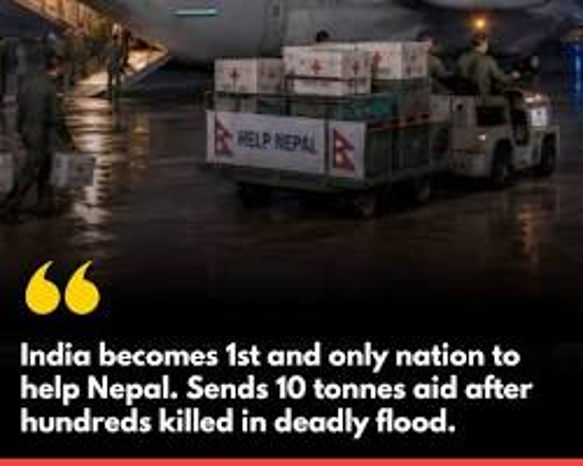
Following direct diplomatic outreach, the Indian Air Force (IAF) mobilized Humanitarian Assistance and Disaster Relief (HADR) flights from Hindon Air Force Station. Heavy-lift aircraft, including C-130J Hercules and C-17 transports, dispatched over 47.5 tonnes of essential relief materials to priority zones. Aid packages included:
- Emergency temporary shelters and heavy-duty tarpaulins.
- Water purification units, hygiene kits, and emergency generators.
- Critical trauma medicines, life-saving drugs, and ration packs.
2. Cross-Border Diplomatic & Ground Coordination
The Indian Embassy in Kathmandu worked directly with Nepalese disaster management authorities. Specialized teams, including personnel from the National Disaster Response Force (NDRF), coordinated search-and-rescue efforts, assisted stranded citizens, and managed emergency medical support along affected river basins.
To read more about disaster relief operational standards, check out official updates from the National Disaster Response Force (NDRF).
Key Lessons Learned: Building Transboundary Resilience
Disasters do not stop at political borders. The cascading impacts of the floods across northern South Asia underline critical areas for long-term reform:
- Integrated Transboundary Early Warning Systems (EWS) Real-time hydrological data sharing must be upgraded across shared river basins. Expanding automated telemetry stations on high-altitude rivers allows both up-river and down-river communities crucial extra hours to evacuate.
- Infrastructure Climate-Proofing Bridges, roads, and hydro-power projects built in fragile mountain zones must be engineered to withstand higher-frequency extreme weather events rather than legacy historical averages.
- Pre-Positioned Regional Logistics While bilateral HADR responses were rapid, establishing joint emergency stockpile hubs near key border crossings reduces response times when weather grounds aviation assets.
- Joint Basin Level Ecological Management Reforestation, soil conservation, and landslide mitigation must be executed collaboratively along entire watershed basins rather than managed piecemeal within national boundaries.
For insights into international frameworks governing disaster risk reduction, consult the UNDRR Sendai Framework Guidelines.
Looking Ahead
The flash floods in Nepal emphasize the growing realities of changing regional climate profiles. Rapid aid deployment highlights the importance of strong neighborly solidarity, but long-term safety depends on moving from reactive emergency response to proactive transboundary climate resilience.