
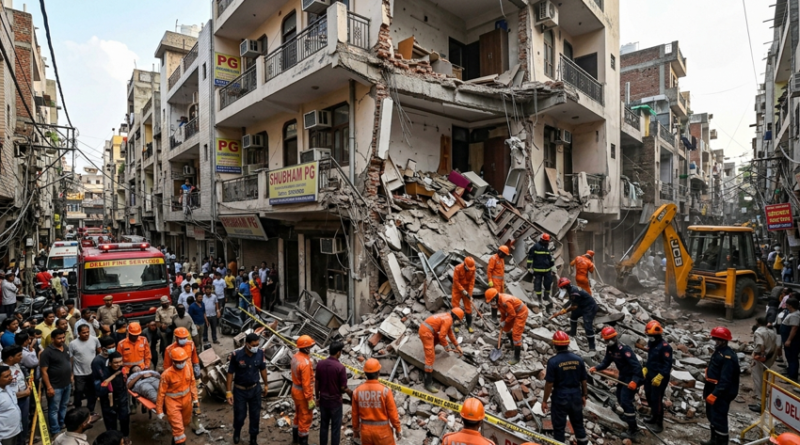
The Unseen Cracks of South Delhi: Unpacking the Devastating Satya Niketan Building Collapse
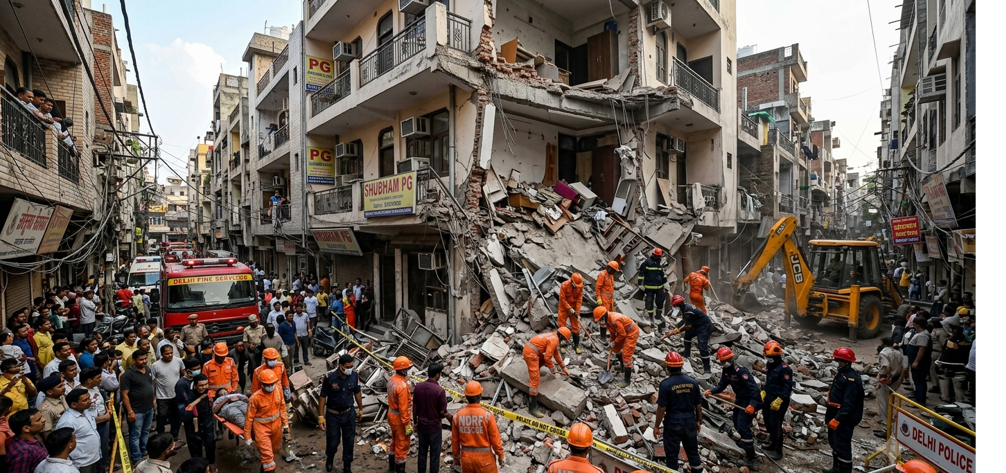
In the bustling alleyways of South Delhi’s Satya Niketan—a vibrant educational hub catering to thousands of Delhi University students—tragedy struck when a multi-story paying guest (PG) building collapsed. What began as a typical weekend transformed into a scene of chaotic emergency response as concrete, brick, and dust blanketed the narrow lanes. Beyond the immediate human toll and the frantic rescue operations mounted by disaster relief teams, the incident exposes a long-festering crisis at the intersection of rapid urban commercialization, structural neglect, and lax regulatory enforcement across metropolitan student hubs.
The immediate trigger behind the catastrophic structural failure points toward high-risk structural alterations and foundation instability. Eyewitness accounts and initial reports indicate that ongoing basement modification and ground-floor renovation work severely compromised the weight-bearing integrity of the aging building. In dense urban pockets like Satya Niketan, property owners frequently alter residential layouts to maximize rental bed capacities. When load-bearing walls or foundational support columns are tampered with to create additional commercial space or extra rooms without proper engineering oversight, structural failure becomes an imminent danger rather than a distant risk.
This tragedy highlights the stark realities of unregulated private student accommodations in major academic centers. Driven by high demand near university campuses, residential structures constructed decades ago are regularly retrofitted into high-density student housing. Many of these units operate with minimal civic oversight, lacking proper structural audits, adequate fire exits, or compliance with local municipal building codes. The collapse serves as a grim reminder that thousands of outstation students reside daily in spaces where profit margins are prioritized over fundamental habitability and safety standards.
Addressing this systemic issue requires moving past temporary outrage and enforcing rigorous, long-term policy reforms. Municipal authorities must institute mandatory structural stability certifications for all residential properties converted into commercial student accommodations. Furthermore, transparent reporting mechanisms, routine safety inspections, and strict penalties for unauthorized structural modifications are essential to prevent similar occurrences. For further context on regional urban planning policies, explore structural guidelines detailed by the Delhi Development Authority and review ongoing civil safety advisories from the National Disaster Management Authority.
Ultimately, the collapse in Satya Niketan must mark a turning point in how urban administrative bodies manage high-density educational enclaves. Ensuring safer living environments for students is not merely a matter of municipal compliance, but a vital duty of care owed to young scholars leaving their homes to pursue higher education. Without aggressive regulatory enforcement and comprehensive structural audits, the silent risks embedded within metropolitan housing infrastructure will continue to threaten innocent lives.