
Forgotten Flavors: Decoding the True Pre-Colonial Indian Plate
Modern conversations around traditional Indian food usually fixate on the sudden appearance of New World ingredients—reminding us that tomatoes, potatoes, and green chillies were introduced by Portuguese traders long before the British consolidated control. While that historical pivot is well known, it overlooks a more compelling question: how did pre-colonial cooks achieve complex heat, mouth-coating richness, and vivid colors without any of those modern crutches?
The answer lies in a sophisticated culinary architecture rooted in regional biodiversity and Ayurvedic balance. Heat, for instance, was far more nuanced than the straightforward burn of modern capsicums. Cooks relied on a multi-layered matrix of native spices. Black pepper provided a sharp, immediate sting, while long pepper (pippali) offered a sweet, earthy, slow-building heat. Fresh ginger, brown mustard seeds, cubeb berries (kabab chini), and raw garlic completed a fiery profile that warmed the body without overpowering the delicate flavors of native grains.
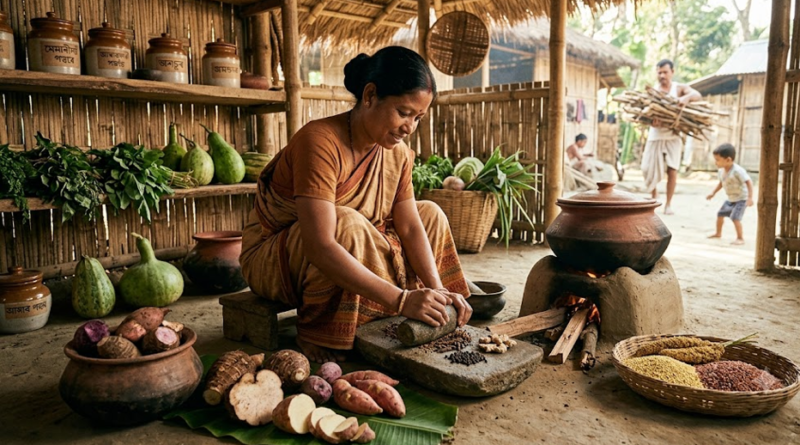
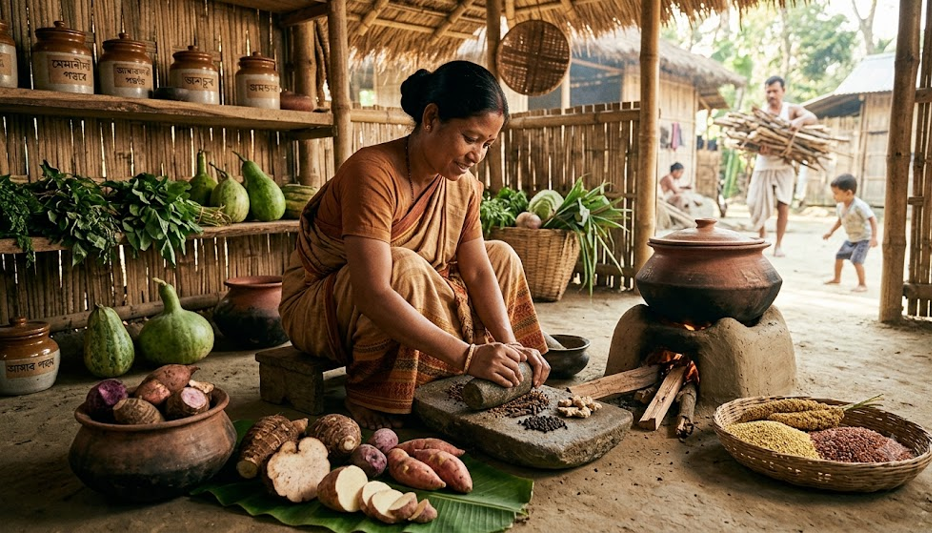
To create texture and substance without the potato, ancient Indian kitchens harnessed a rich subterranean yield. Dense, mineral-rich root tubers—such as elephant foot yam (suran), colocasia (arbi), purple yam (kand), lotus root (kamal kakdi), and sweet potatoes—were baked in ash, slow-roasted in earthen pots, or simmered in spiced curries. These indigenous roots provided the comforting bulk and starch that defined regional comfort foods across the subcontinent.
Achieving rich, savory gravies without tomatoes or onions required pure culinary ingenuity. Souring was an art form driven entirely by micro-climates. Coastal cooks favored deep-purple kokum and fresh coconut milk, eastern regions relied on fermented bamboo shoots and elephant apple (ou tenga), while northern and central plains used sun-dried green mango (amchur), wood apple (bel), pomegranate seeds (anardana), and aged curd. Gravies were thickened not with heavy tomato purees, but with roasted poppy seeds, toasted sesame, melon seeds, chana dal pastes, and fresh dairy like churned white butter and aromatic ghee.
Ancient meals were grounded in a diverse array of heirloom grains long before white rice and refined wheat dominated daily plates. Nutritious millets like kodo, foxtail, sorghum (jowar), and finger millet (ragi) formed the core daily sustenance alongside indigenous red and black rice strains. Paired with native pulses, wild leafy greens (saag), and slow-cooked meats or fish tempered in brass cookware, pre-colonial Indian food was a dynamic, highly localized, and deeply nourishing culinary system.