
Echoes of 1992: The Kuki-Naga Conflict
By Dr. Neha Boruah
Published on June 15, 2026
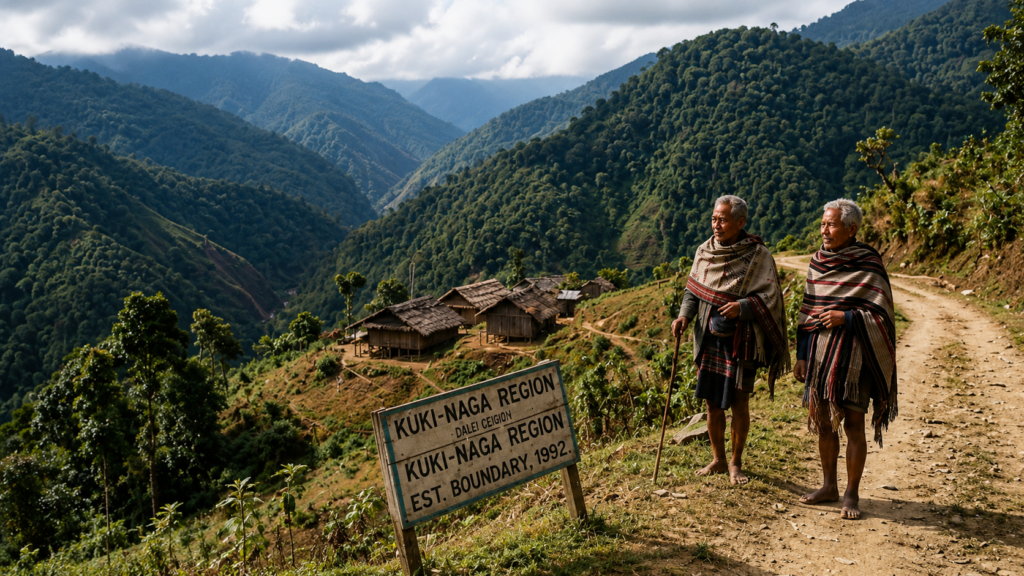
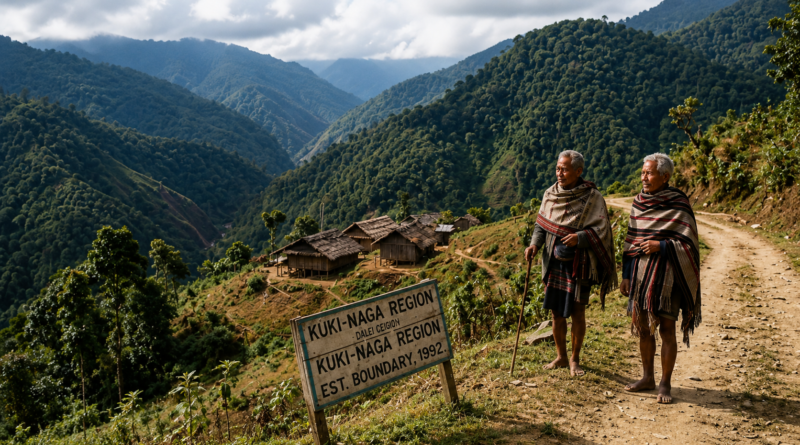
The Nagas and Kukis are two major tribal groups in Northeast India. Indeed, they share a long and complex history. At times, they lived together in peace. At other times, however, they fought bitterly over land. After India gained independence, both groups wanted their own political identity.
Consequently, these deep tensions led to the Naga-Kuki conflict of 1992 to 1997. This war in Manipur remains a critical example of ethnic violence. Driven by old grievances and land disputes, the clash permanently changed local politics.
Origins of the Tension
The roots of the conflict come from British colonial rules. Land arguments and political rivalry also played a massive part. Historically, both groups moved into the hills of Manipur at different times. Therefore, early interactions revolved mostly around trade and farming.
However, British rulers chose to classify the Nagas and Kukis as separate tribes. This choice created fixed divisions. Later, these divisions became the basis for ethnic fights.
Furthermore, the British hired Kukis as soldiers in the early 20th century. As a result, the Nagas felt the Kukis received special treatment. This policy created a deep rivalry. Ultimately, it lasted long after the British left.
After independence, competing political movements made the friction much worse. For example, the Nagas wanted a sovereign state called “Nagalim.” This goal directly clashed with Kuki demands for their own land, called “Zale’ngam.” Consequently, this clash of visions caused violent battles for control.
Insurgency and Armed Groups
The 1980s and 1990s saw a massive rise in armed groups across Manipur. Specifically, each group used weapons to claim land. Meanwhile, the main Naga rebel group split into two factions. These were the NSCN (IM) and NSCN (K). Both factions fought hard for an independent Naga homeland.
Naga rebels viewed the Kukis as outsiders on ancestral Naga lands. Consequently, this view led to violent attacks to drive the Kukis out. In response, the Kukis formed their own armies. The most famous were the Kuki National Army (KNA) and the Kuki National Organisation (KNO). These armies fought to defend Kuki villages. Moreover, they worked to stop Naga dominance.
The Indian government struggled to keep the peace during this crisis. In fact, many accused security forces of helping certain rebel groups. They believed the state ignored ethnic violence entirely. This dangerous situation led to the burning of entire villages. Ultimately, thousands of civilians lost their homes, and thousands died.
Impact on Ordinary People
Human rights groups reported massive displacement during the war. Whole families fled for their lives. Specifically, Kukis ran from Naga areas. Similarly, Nagas fled from Kuki areas. As a result, families lived in poor refugee camps for many years.
The war was highly dangerous for women and children. Civilians trapped in the fighting faced severe violence. Furthermore, they lost their homes and their ways to make money. Armed groups often targeted women to exact revenge or show power.
Additionally, the long war kept women out of peace talks. This happened because traditional male leaders continued to make all major decisions.
At the same time, the crisis ruined local schools and business. Armed groups blocked vital trade routes between Myanmar and Manipur. Therefore, these blockades destroyed local economies. These communities depended heavily on cross-border trade.
Government Responses and Policy Failures
The Naga-Kuki conflict looks a lot like other ethnic fights in South Asia. For instance, the Bodo conflicts in Assam show the same patterns. Both involve fighting over land and power. To heal these deep wounds, experts often look at global models. The peace process in South Africa is a common example.
However, the Indian government’s historical approach was mostly slow. Successive leaders treated the war as a simple law-and-order problem. They did not view it as a deep political issue. Therefore, they failed to find a long-term fix.
The state put Manipur under the Armed Forces Special Powers Act (AFSPA). Although this brought in a massive number of soldiers, it failed to fix core problems. Consequently, automotive peace was impossible. Neither community found relief.
Manipur’s politics are deeply split along ethnic lines. Because of this, local governments faced constant accusations of playing favorites. Many felt they did this just to win elections. This manipulation made both sides view the government with deep suspicion.
For instance, the government signed a major peace agreement with the NSCN (IM) in 2015. However, they left out Kuki leaders entirely. Consequently, this choice made the Kukis fear the results. They worried a Naga peace deal would hurt Kuki interests.
The Present Scenario: New Fights
Recent events prove that old tensions are still dangerous. Recently, a group of drunk Kuki youths allegedly beat up a Tangkhul Naga youth. The youth went to the hospital in Imphal. After this incident, violence spread fast to villages in the Litan area.
Reports show that attackers burned at least 16 Tangkhul houses. In response, others quickly burned down a Kuki home. Local community groups joined the fight with angry statements. Soon, gunfire broke out across several villages.
The May 13 Ambush
The crisis grew much worse on May 13. Gunmen ambushed and killed three senior leaders of the Thadou Baptist Association of India. Specifically, the gunmen shot at their cars on the isolated “German Road.” This happened between Kotlien and Kotzim villages.
The victims were Dr. Rev. Vumthang Sitlhou, Rev. Kaigoulum Lhouvum, and Pastor Paogulen Sithlou. In addition, four other people were injured.
People still argue over who planned the attack. Kuki groups blamed valley militant groups and the Zeliangrong United Front (ZUF). On the other side, some Naga voices blamed a small group. They pointed to the Kuki Liberation Army.
The location of the ambush raised serious questions. Public figures noted that Kuki groups usually control that area. Therefore, investigators need to find out who knew the Church leaders were traveling that day.
Border Attacks and Road Blockades
This crisis happened at the same time as fights on the border. On May 7, three Tangkhul Naga villages came under armed attack. The fire came from across the India-Myanmar border.
Beyond the shooting, groups have started taking hostages. These acts have targeted women and children. Church leaders and local groups helped free some hostages. However, arguments over missing people keep feeding deep mistrust.
Today, the entire state feels the effects of this divide. Strict blockades have stopped the flow of food and essential goods:
| Group | Blockade Action | Result |
| Kukis | Stopping goods from entering Meitei and Naga areas. | Kuki residents cannot travel to Dimapur. They cannot cross the Naga district of Senapati. |
| Nagas | Stopping goods from entering Kuki areas. | Tangkhul Nagas are stuck in Ukhrul. They cannot pass through Kuki-controlled roads to Imphal. |
To beat these road blockades, the state government is planning a fix. Specifically, they will use emergency helicopter services to move people and supplies.
Valley Demands and Population Changes
Meanwhile, anger remains high in the Imphal Valley. People are furious over the recent deaths of two children. A bomb killed them in the Bishnupur district. Along with demands for justice, groups are demanding a policy change. They want an update to the National Register of Citizens (NRC) before the next census.
To look into these deep changes, the Union Home Ministry set up a high-level committee. A former Supreme Court Judge will lead it. This group will spend the year studying population shifts. They aim to suggest new laws and policy fixes.
Conclusion
The Naga-Kuki conflict remains a highly complex dispute. It grew out of colonial history and modern political friction. The war shows how hard it is to balance identity and land rights. A real fix requires solving these historical problems. The state cannot just rely on soldiers.