
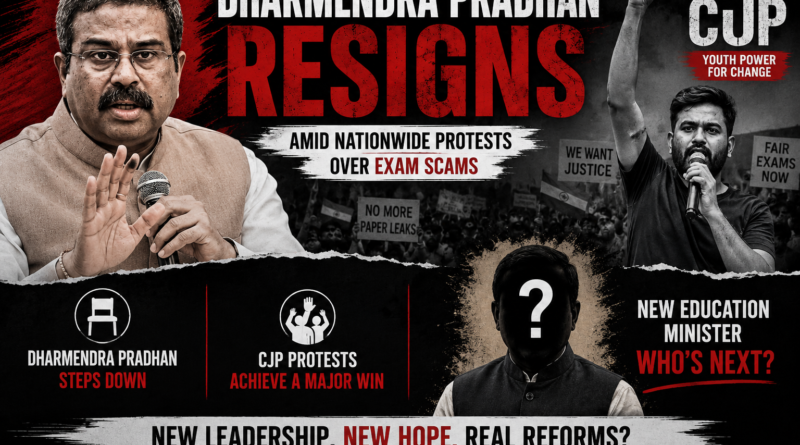
Big Education Shake-Up: Pradhan Resigns, Joshi Takes Charge
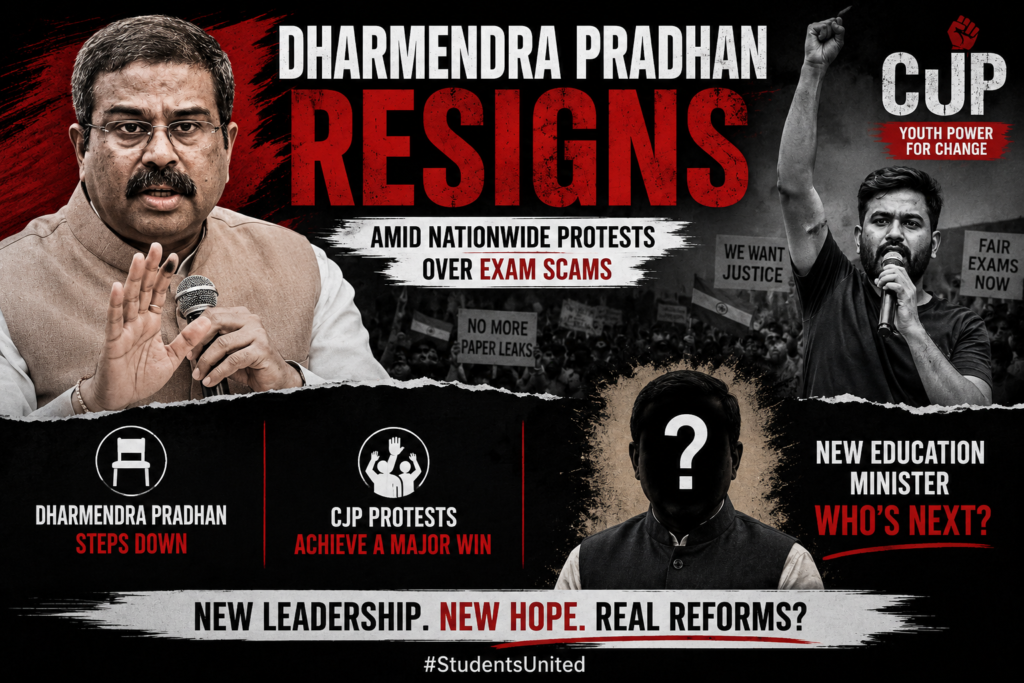
In a major political development, Union Education Minister Dharmendra Pradhan has resigned following weeks of nationwide protests over the alleged NEET paper leak and concerns surrounding India’s examination system. The resignation came after sustained demonstrations led by the Cockroach Janata Party (CJP), marking one of the biggest youth-led protest victories in recent years.
Soon after the resignation, Pralhad Joshi was given additional charge of the Ministry of Education while continuing to serve as the Union Minister for Consumer Affairs, Food and Public Distribution, and New and Renewable Energy.
Why Did Dharmendra Pradhan Resign?
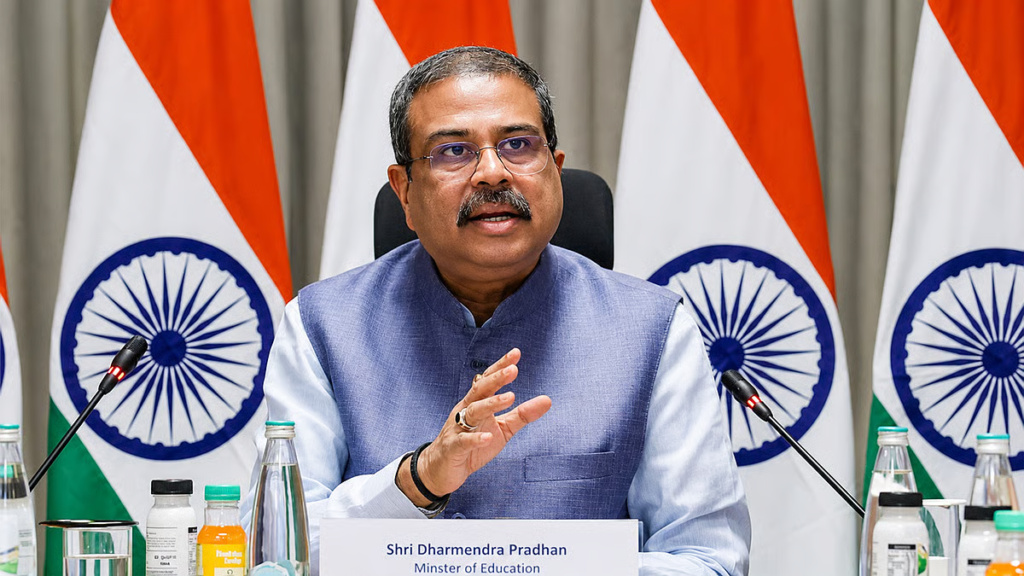
The protests began after allegations of irregularities and paper leaks in the NEET examination triggered widespread anger among students and parents. As the movement gained momentum across the country, demands for accountability intensified, with Pradhan’s resignation becoming the central demand of the protesters.
In his resignation statement, Pradhan said he accepted moral responsibility and stepped down to protect students’ interests and prevent further disruption to the education system.
Who Is the New Education Minister?
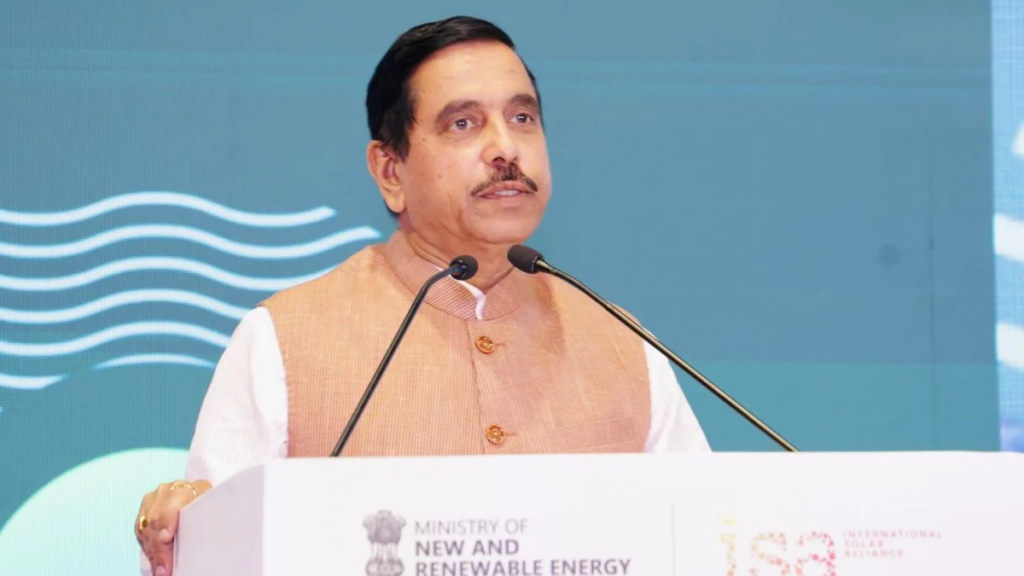
Following Pradhan’s resignation, Pralhad Joshi has been assigned charge of the Ministry of Education.
A six-time Member of Parliament from Dharwad, Karnataka, Joshi is one of the BJP’s senior leaders. He has previously served as Union Minister for Parliamentary Affairs, Coal and Mines, and currently heads the Ministries of Consumer Affairs, Food and Public Distribution, and New and Renewable Energy. The Education Ministry has now been added to his responsibilities.
After assuming charge, Joshi said he accepted the responsibility with “a sense of duty and humility” and pledged to work towards strengthening India’s education system.
What Does CJP Want Now?
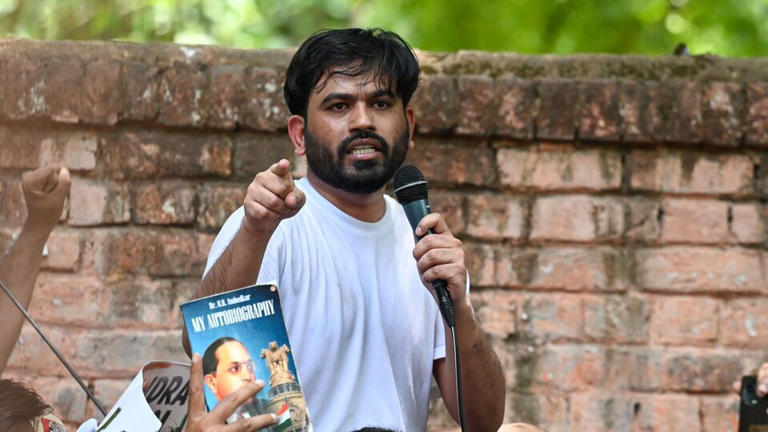
Although the resignation fulfilled its primary demand, the CJP announced that its movement is about broader reforms rather than a single minister.
The organisation has called for:
- Comprehensive reforms to India’s examination system.
- Compensation for families of students who allegedly died by suicide following the NEET controversy.
- Withdrawal of police cases filed against peaceful protesters.
- Greater transparency and accountability in national examinations.
Following discussions with the Centre, CJP announced the suspension of its nationwide protests after the government agreed to its key demands and assured further reforms.
Challenges Before the New Minister
Pralhad Joshi takes over at a time when confidence in India’s examination system has been shaken. His immediate priorities are expected to include:
- Strengthening security to prevent paper leaks.
- Improving transparency in national entrance examinations.
- Restoring public trust in testing agencies.
- Implementing long-term examination reforms promised by the government.
Education experts believe that while a change in leadership is significant, lasting institutional reforms will determine whether confidence among students can truly be restored.
Conclusion
Dharmendra Pradhan’s resignation represents a major political moment, reflecting the impact of sustained public pressure and student-led protests. With Pralhad Joshi now heading the Education Ministry, attention shifts from political accountability to policy implementation. The coming months will reveal whether the promised reforms can address long-standing concerns over examination integrity and restore trust among millions of students across India.