
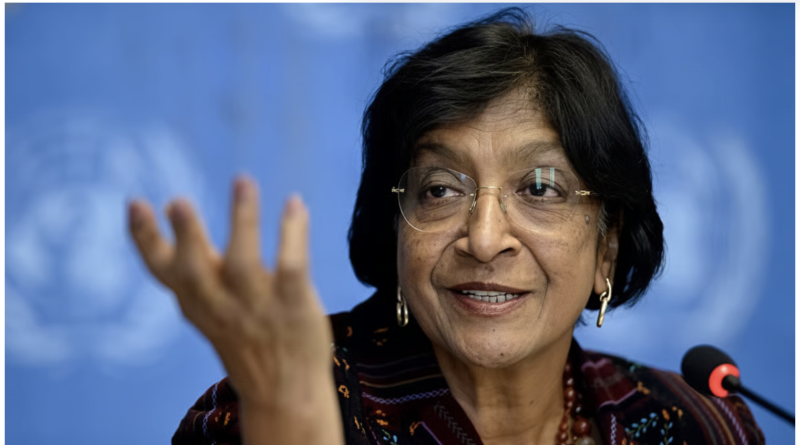
Navi Pillay Nobel Peace Prize 2026: Her Life, Work and Contributions to Society

The Nobel Peace Prize is one of the world’s most prestigious honours, recognising individuals and organisations that make significant contributions to peace, justice and international cooperation. In 2026, the award was given to Navanethem “Navi” Pillay, a distinguished South African jurist and human rights advocate, for her efforts to promote peace and international law.
Announced on 9 October 2026, the award recognises Pillay’s lifelong commitment to defending human rights, strengthening international legal institutions and ensuring accountability for serious crimes. Her career demonstrates how the law can become a powerful instrument for protecting vulnerable communities and challenging discrimination.
According to the official Nobel Peace Prize announcement, Pillay has played an important role in advancing the prosecution of war crimes, crimes against humanity and genocide. Her achievements have contributed to international discussions about justice, equality and the responsibility of governments to protect human dignity.
Who Is Navi Pillay?
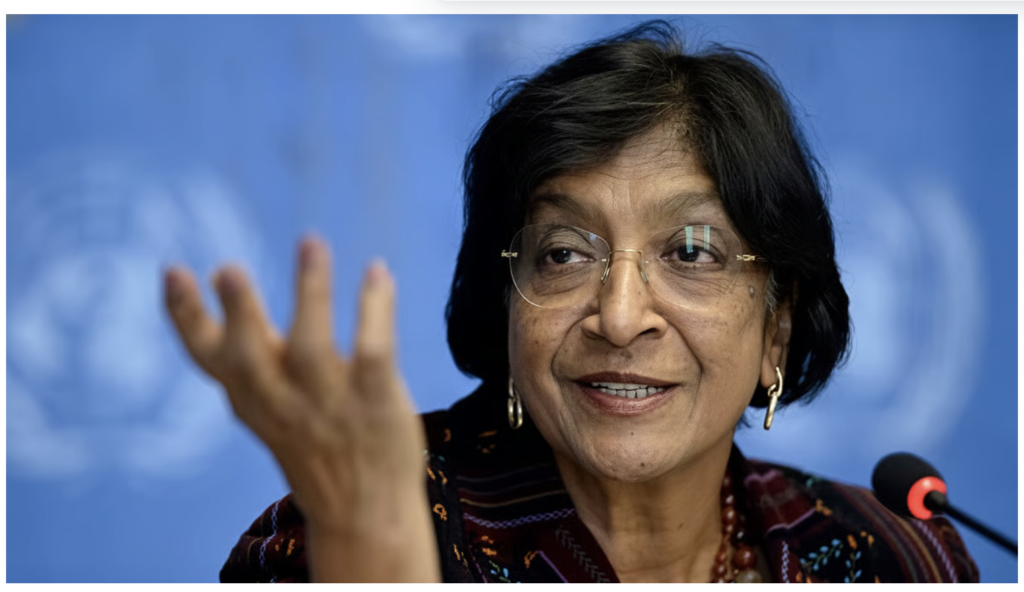
Navanethem Pillay, widely known as Navi Pillay, was born in 1941 in Durban, South Africa, into a family of Indian Tamil descent. Growing up under apartheid, a system of institutionalised racial segregation and discrimination, she witnessed the consequences of inequality and exclusion.
Her experiences helped shape her commitment to justice and equality. She pursued a career in law at a time when racial and gender discrimination created significant barriers for women from marginalised communities.
In 1967, Pillay established her own law practice in Natal, becoming the first woman to do so in the province. She later became the first non-white woman appointed to South Africa’s High Court.
Throughout her career, she served in several important legal and international institutions, including the International Criminal Tribunal for Rwanda, the International Criminal Court and the United Nations. From 2008 to 2014, she served as the United Nations High Commissioner for Human Rights.
Learn more about her life and achievements through the United Nations’ profile of Navi Pillay.
Why Did Navi Pillay Win the Nobel Peace Prize 2026?
Navi Pillay received the 2026 Nobel Peace Prize for her efforts to promote peace and international law. Her work has helped strengthen the principle that individuals, including those in positions of power, must be held accountable for serious violations of international law.
The Nobel Committee highlighted her courage, integrity and contribution to developing an international legal system capable of addressing grave crimes.
Her work demonstrates that peace involves more than the absence of war. Lasting peace also requires justice, accountability, respect for human rights and effective legal institutions.
The award recognises several important aspects of her career:
- Defending people who faced discrimination under apartheid.
- Advancing accountability for war crimes and crimes against humanity.
- Contributing to legal recognition of sexual violence as a serious international crime.
- Supporting international institutions responsible for protecting human rights.
- Promoting the principle that governments and powerful individuals must be subject to the law.
Read the official Nobel Peace Prize laureate profile for further details.
Major Contributions of Navi Pillay to Society
1. Fighting Apartheid and Racial Discrimination
One of the earliest and most significant contributions of Navi Pillay was her work challenging racial discrimination in South Africa.
Under apartheid, the rights and opportunities of people were determined largely by racial classification. Black South Africans and other non-white communities experienced extensive legal, political and social restrictions.
Pillay used her legal training to defend people who challenged the apartheid system, including activists involved in the struggle against racial oppression. Her work contributed to the broader effort to establish equality before the law.
Her professional journey also challenged the exclusion of women and non-white people from influential legal positions.
Contribution to society: Her career illustrates how legal advocacy can challenge discriminatory institutions and support the pursuit of equal rights.
2. Advancing Justice for Victims of Genocide
Pillay served as a judge and later president of the International Criminal Tribunal for Rwanda, which was established to prosecute individuals responsible for crimes committed during the 1994 Rwandan genocide.
Her work at the tribunal contributed to important developments in international criminal law. Among the most significant was the recognition, in the landmark Prosecutor v. Jean-Paul Akayesu case, that rape and sexual violence could constitute crimes against humanity and acts of genocide when the relevant legal requirements were met.
This was an important development because sexual violence had often been overlooked or inadequately addressed in the prosecution of mass atrocities.
The case helped establish that sexual violence can be used as a weapon of destruction against individuals and communities and must be treated as a serious international crime.
Contribution to society: Her judicial work strengthened the recognition of survivors’ experiences and helped expand the legal tools available to prosecute grave human rights violations.
Further information is available from the International Residual Mechanism for Criminal Tribunals.
3. Promoting Human Rights Through the United Nations
From 2008 to 2014, Navi Pillay served as the United Nations High Commissioner for Human Rights.
In this role, she worked to promote and protect fundamental rights, including freedom from discrimination, the right to equality and the protection of vulnerable communities.
The Office of the High Commissioner for Human Rights works with governments, civil society organisations and international institutions to monitor human rights conditions, support legal standards and address violations.
Pillay’s tenure included engagement with difficult international situations involving political repression, conflict, discrimination and restrictions on civil liberties.
Her work reinforced the idea that human rights are universal and should not depend on a person’s nationality, ethnicity, gender or social position.
Contribution to society: Her leadership helped maintain international attention on human rights violations and reinforced the responsibility of governments to respect fundamental freedoms.
Explore the work of the United Nations Human Rights Office.
4. Supporting Gender Justice and Women’s Rights
Navi Pillay’s career has particular relevance to gender studies and women’s rights because of her work on sexual violence, discrimination and equal access to justice.
The legal recognition of rape and sexual violence as international crimes marked an important step towards addressing violence that disproportionately affects women and girls during conflict.
Her work also demonstrates the importance of women’s representation in judicial and political institutions. By becoming a pioneering woman in the legal profession, she challenged traditional barriers that limited women’s access to positions of authority.
Gender justice involves more than formal equality. It also requires institutions to recognise gender-based violence, address discrimination and ensure that survivors can seek justice.
Contribution to society: Pillay’s work helped strengthen the international legal framework for prosecuting sexual violence and highlighted the importance of gender-sensitive justice.
5. Strengthening International Law and Accountability
A central theme throughout Pillay’s career has been the importance of holding individuals accountable for serious international crimes.
She has served in several influential judicial roles, including at the International Criminal Court and the International Criminal Tribunal for Rwanda. These institutions address crimes that have consequences far beyond national borders.
International criminal justice seeks to ensure that genocide, crimes against humanity and war crimes cannot simply be ignored because perpetrators possess political power or influence.
Pillay’s career has reinforced the principle that justice must apply to powerful individuals as well as ordinary citizens.
Contribution to society: Her work supports the development of international legal institutions that seek to prevent impunity and provide accountability for victims of serious crimes.
Learn more about the International Criminal Court.
6. Her Work on Palestine and Human Rights
Between 2021 and 2025, Pillay chaired the United Nations Independent International Commission of Inquiry on the Occupied Palestinian Territory, including East Jerusalem, and Israel.
The commission investigated alleged violations of international law and human rights in the context of the conflict. Its work contributed to international debates about civilian protection, accountability and the legal responsibilities of parties to armed conflict.
The commission’s findings concerning Gaza included a conclusion that genocide had been committed. Israel rejected these findings. Such conclusions by an investigative commission should be distinguished from a final judgment by a competent international court.
This work placed Pillay at the centre of difficult and politically contested questions concerning international humanitarian law and the protection of civilians.
Contribution to society: Her work brought further attention to the need for independent investigations, evidence-based assessments and accountability for alleged violations of international law.
For background, consult the United Nations Independent International Commission of Inquiry.
7. Defending the Rights of Marginalised Communities
Across her career, Pillay has contributed to discussions about the rights of communities that experience discrimination, violence and exclusion.
Her work reflects the principle that human rights must protect everyone, including people who lack political influence or access to power.
Marginalised communities often face additional barriers when attempting to report abuse, obtain legal representation or receive protection from institutions. Independent courts, human rights organisations and international legal standards can help address these inequalities.
Pillay’s career demonstrates the importance of listening to vulnerable groups and ensuring that their rights are recognised in law and practice.
Contribution to society: Her work has helped promote a broader understanding of equality, dignity and access to justice as essential elements of a peaceful society.
Navi Pillay’s Contribution to Women in the Legal Profession
Navi Pillay’s achievements are also significant in the history of women in law.
At a time when women and non-white professionals faced considerable institutional barriers in South Africa, she established her own law practice and went on to serve in senior judicial positions.
Her professional journey demonstrates that representation matters in institutions responsible for interpreting laws and delivering justice.
When women participate in legal and judicial institutions, they can contribute their expertise and experiences to discussions about discrimination, violence and equal protection.
Pillay’s career offers an important example for young women who aspire to work in law, public service, international relations and human rights advocacy.
Her achievements do not suggest that women alone can solve structural inequality. Rather, they show why fair access to education, professional opportunities and leadership positions is important for society as a whole.
What Can Young People Learn from Navi Pillay?
Navi Pillay’s life offers several lessons for students, educators and aspiring professionals.
First, education can become a tool for social change. Her legal training enabled her to challenge discrimination and contribute to the development of international justice.
Second, courage and integrity matter. Defending human rights may require standing firm even when powerful institutions or individuals disagree.
Third, justice must include vulnerable people. A fair society must ensure that people who experience discrimination or violence have meaningful access to legal protection.
Fourth, institutions matter. Sustainable peace requires courts, laws and international organisations that can investigate violations and hold perpetrators accountable.
Finally, her career shows that professional achievement can have a wider social purpose. Knowledge and expertise become particularly valuable when they are used to address injustice and protect human dignity.
The Significance of the Nobel Peace Prize 2026
The 2026 Nobel Peace Prize draws attention to the relationship between international law and lasting peace.
Armed conflicts and political disputes can create conditions in which civilians suffer violence, displacement and the loss of basic freedoms. International law provides standards intended to protect people and establish responsibility for serious violations.
By recognising Navi Pillay, the Nobel Committee has highlighted the importance of legal accountability and institutions that can operate independently of political pressure.
The award also reminds the international community that peacebuilding requires more than diplomatic agreements. It requires a commitment to justice, human dignity and the protection of fundamental rights.
Read the official announcement of the 2026 Nobel Peace Prize for the committee’s full explanation.
Conclusion
Navi Pillay’s selection as the 2026 Nobel Peace Prize winner recognises a career dedicated to human rights, international law and accountability for serious crimes.
From challenging apartheid in South Africa to serving in international courts and leading human rights initiatives at the United Nations, she has contributed to important developments in the pursuit of justice.
Her work on sexual violence, genocide and the responsibilities of states demonstrates why legal institutions play an essential role in protecting vulnerable communities and promoting peaceful coexistence.
Her legacy is not only about individual achievement. It is also about strengthening the principle that every person deserves dignity and that no individual should be beyond the reach of the law.
For students, researchers and human rights advocates, Navi Pillay’s journey offers a valuable example of how legal knowledge, professional commitment and public service can contribute to a more just society.
For more information: Visit the official Nobel Peace Prize website and the United Nations website.
Frequently Asked Questions (FAQs)
1. Who won the Nobel Peace Prize in 2026?
Navanethem “Navi” Pillay, a South African jurist and former United Nations High Commissioner for Human Rights, won the 2026 Nobel Peace Prize for her efforts to promote peace and international law.
2. What is Navi Pillay famous for?
She is known for her work in international criminal justice, human rights, the fight against apartheid and the prosecution of serious international crimes.
3. What was Navi Pillay’s contribution to women’s rights?
Her judicial work helped advance the recognition of sexual violence as a serious international crime. Her professional achievements also challenged barriers faced by women in the legal profession.
4. What did Navi Pillay do at the United Nations?
She served as United Nations High Commissioner for Human Rights from 2008 to 2014 and later chaired the UN Independent International Commission of Inquiry on the Occupied Palestinian Territory from 2021 to 2025.
5. Why is Navi Pillay important to society?
Her career has contributed to the development of international law, accountability for grave crimes and the protection of human rights. Her work demonstrates the role of justice in building a more peaceful world.
Suggested image alt text: Navi Pillay, 2026 Nobel Peace Prize winner, recognised for her contributions to human rights, international law and justice.
Suggested social media description: Meet Navi Pillay, the 2026 Nobel Peace Prize winner. Discover her remarkable journey from challenging apartheid to advancing international justice, gender equality and human rights.
Suggested related blog topics:
- The Role of the United Nations in Protecting Human Rights
- Women Who Changed the History of International Law
- Gender Justice and the Fight Against Sexual Violence
- Understanding the Role of the International Criminal Court
- Nobel Peace Prize Winners and Their Contributions to Society