
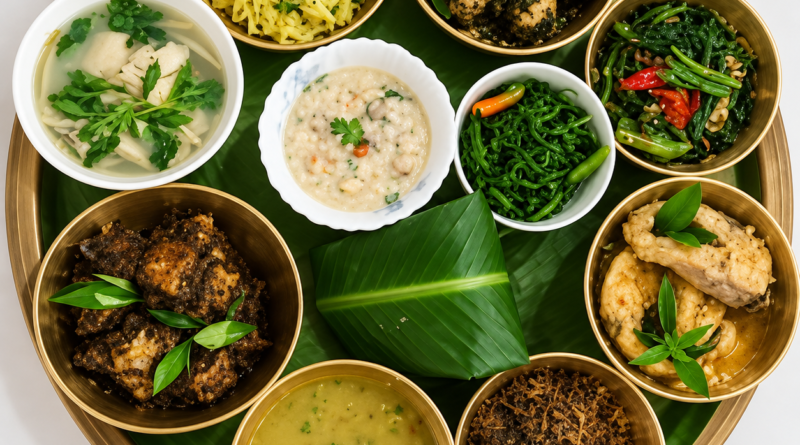
Unveiling Khampti Cuisine: A Culinary Journey into Arunachal Pradesh’s Authentic Heritage
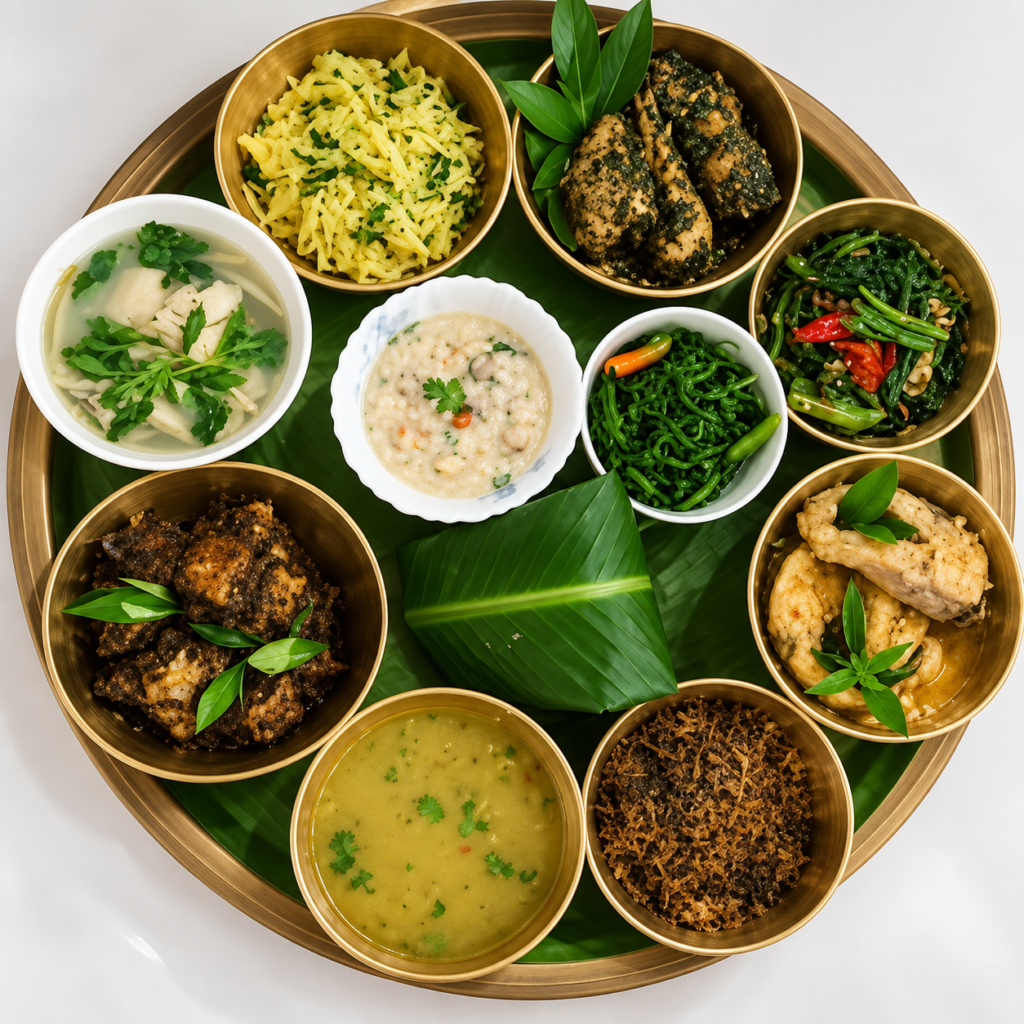
Tucked away in the serene river valleys of eastern Arunachal Pradesh, the Tai Khampti community preserves one of Northeast India’s most distinctive culinary traditions. Deeply rooted in Theravada Buddhist heritage and heavily influenced by Southeast Asian flavor profiles, Khampti cuisine relies on fresh river catches, fragrant local herbs, wild foliage, and sticky rice varieties. Rather than using heavy oils or rich dairy, the community uses slow-steaming, Ko Pat leaf wrapping (Phrynium pubinerve – Marantaceae, the arrowroot family), charcoal roasting, and raw herb infusions to craft balanced, deeply aromatic meals.
At the center of any authentic Tai Khampti meal is sticky rice, prepared using ancient methods passed down through generations. The most famous preparation is Khawlam (bamboo rice), where local glutinous rice is soaked, sealed inside hollow bamboo tubes using Ko Pat leaves, and roasted slowly over open charcoal embers. The natural inner membrane of the bamboo seals in moisture, infusing the rice with a delicate woody aroma. Another staple is Khaupuk, a crispy snack made from steamed sticky rice pounded with aromatic sesame seeds and lightly fried, serving as both a daily energy booster and a festive delicacy.
The undisputed masterpiece of Khampti gastronomy is Paa Saa, a cold, herb-infused fresh river fish soup prepared without direct heat. To make this dish, fresh river fish like Pakkhum are carefully skinned, and the raw meat is finely minced alongside fresh coriander, Sichuan pepper, basil, Vietnamese mint, and a wild leaf known as Khum Phat to neutralize any fishy taste. Meanwhile, the fish carcass and bones are charred over charcoal to create a rich, smoky extract. When mixed with cold spring water and strained, the result is a bright green, nutrient-dense broth celebrated for its complex flavors and medicinal properties.
Beyond fish soups, Khampti home cooking celebrates the natural abundance of the forest and home gardens. Fish preparations range from Paa Ping (seasoned river fish grilled on bamboo skewers) to Paa Pho (spiced fish parcels wrapped tightly in leaves and baked under hot ashes). Vegetable dishes focus on simplicity and freshness, such as Phak Kho, a mixed green leafy stew, and Munkhua Phun, mashed roasted brinjal seasoned with chili pastes, local garlic, and wild ginger. Meals are routinely accompanied by fermented bamboo shoots and homemade herbal pastes that lend a subtle sour bite to the palate. Exploring the traditional flavors of Namsai District offers a rare glimpse into a food culture defined by sustainability, community collaboration, and harmony with nature. Khampti cuisine highlights how simple, locally harvested ingredients can yield extraordinary culinary depth without artificial additives. Whether sampling steaming Khawlam at a local cultural festival or savoring Paa Saa by the riverbanks, tasting these heritage dishes remains an unforgettable highlight for travelers exploring Northeast India.