
Game-Changing Guwahati–Sairang Corridor Unites the Hills
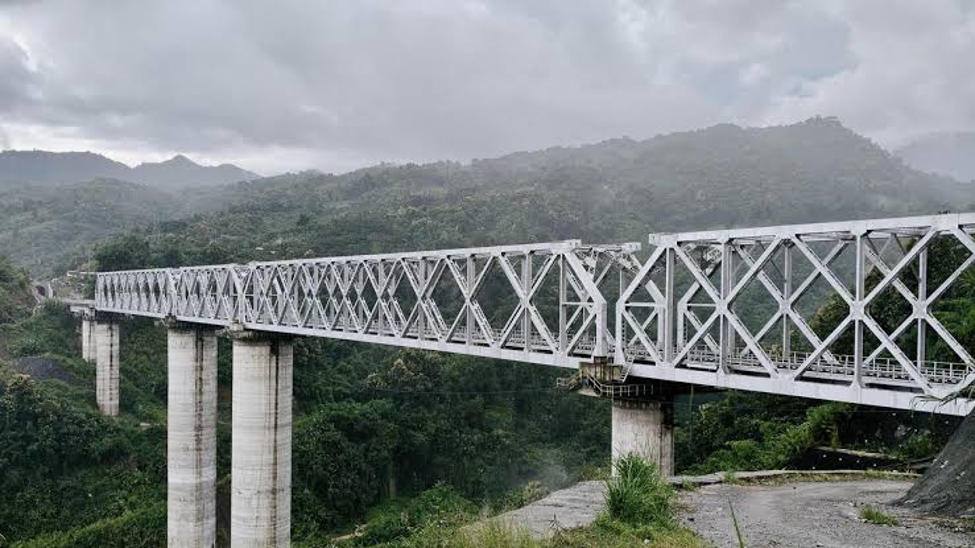
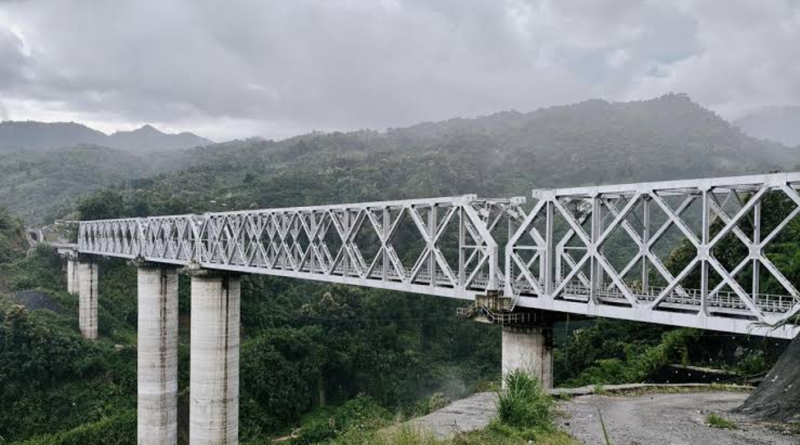
Bridge Infrastructure in Mizoram. Source: The Hindu
The long-awaited expansion of Indian Railways into Northeast India has transformed mobility. The Guwahati to Sairang corridor lies at the heart of this transformation. It links Guwahati in Assam to the hill region near Mizoram’s capital, Aizawl.
The corridor relies heavily on the 51.38 km Bairabi-Sairang railway line. Before its completion, Mizoram’s rail network reached only up to the border town of Bairabi. Extending the track through the hills to Sairang has effectively plugged Aizawl into the national broad-gauge network. Daily services like the Guwahati to Sairang Express now connect Assam’s commercial capital with Mizoram.
Engineering Mastery Across Unforgiving Terrain
Constructing a high-capacity broad-gauge line through the Lushai Hills was a major infrastructure project.
Northeast Frontier Railway tackled it as one of the region’s most complex undertakings.
The alignment crosses dynamic seismic zones and steep mountain valleys.
Dense rainforests demanded specialized engineering solutions.
Guwahati to Sairang features 45 tunnels spanning roughly 16 kilometers and 153 total bridges.
Among these structures are tall pier bridges spanning deep river gorges.
Crossings over the Kurung River reach heights similar to Asia’s world-class projects.
These efforts help keep the track resilient against monsoon rains and landslides.
These conditions often stall highway transit along the Assam-Mizoram border.
Economic Impact and Trade Logistics
The direct rail link between Guwahati and Sairang provides economic relief for businesses and consumers throughout Mizoram. Historically, the state relied heavily on National Highway 306 for goods transport, leaving supply chains vulnerable to weather disruptions and high freight prices.
With freight operations running directly into Sairang, bulk goods—including essential food supplies, cement, and consumer merchandise shipped from logistical hubs near Guwahati—now reach central Mizoram at lower costs. In turn, local agricultural goods, bamboo items, and handloom textiles from Mizoram gain a direct export channel to larger regional markets across Assam and greater India.
Transforming Regional Tourism and Connectivity
Beyond trade, the route opens up tourism in Mizoram.
Moreover, travel from Guwahati to Aizawl via road previously took over 15 to 20 hours.
It depended on traffic and weather conditions.
The direct train cut transit times down significantly.
It offers a comfortable, scenic journey through the Barail range and the hills of southern Assam into Mizoram.
Tourists traveling along this corridor, Guwahati to Sairang, experience panoramic views of the region’s countryside.
They see hill vistas and valley rivers along the route.
Enhanced access makes it far simpler to visit Aizawl, explore ecotourism sites, and participate in Mizoram’s cultural festivals year-round.
Strategic Importance for Northeast India
Guwahati to Sairang is a key component of India’s broader infrastructure strategy for the region and its Act East policy.
Establishing strong rail arteries through hubs like Guwahati helps integrate border states into regional trade routes.
From Sairang, plans to extend rail tracks further south toward Myanmar’s border will position this corridor as an international trade gateway.
This development reinforces Assam and Mizoram as vital pillars of Northeast India’s growth.